
Why Many Businesses Are Paying Premium Real Estate Prices to Store Paper
Across Toronto and the GTA, office space is one of the largest operating expenses for most organizations. Businesses carefully evaluate how their workspace is used — optimizing layouts, reducing unused areas, and adapting to hybrid work environments. one often overlooked factor is the hidden cost of storing files. Paper records, file rooms, and storage cabinets quietly consume valuable office space, adding significant expenses that many organizations fail to account for.
Yet one costly inefficiency often goes unnoticed:
paper records occupying valuable office space
File rooms, storage cabinets, and banker’s boxes filled with archived documents frequently consume hundreds — sometimes thousands — of square feet within an office. That space could otherwise be used for employees, collaboration areas, or revenue-generating operations.
For many businesses, storing inactive records onsite quietly becomes one of the most expensive ways possible to manage documents.
The Real Cost of In-Office Records Storage
When organizations think about records storage, they often focus on convenience rather than cost. But storing large volumes of paper in the office carries several hidden — and compounding — expenses.
High Real Estate Costs
Commercial office space across Toronto and the GTA comes at a premium. Whether leasing or owning, every square foot has a measurable cost.
A standard records storage box requires approximately one cubic foot of space — but the real impact is scale.
Many organizations store:
- hundreds of boxes in cabinets and closets
- thousands of boxes in file rooms or storage areas
- decades of archived records kept for compliance purposes
When these records occupy office space, businesses are often paying significant — and largely invisible — real estate costs per box.
Example: Using a conservative planning ratio of approximately 2 boxes per sq. ft. in a dedicated storage room with racking and aisle space, 1,000 boxes can occupy about 500 sq. ft. At $35–$50 per sq. ft. for GTA office space, that represents roughly $17,500–$25,000 per year in occupancy cost alone — or about $18–$25 per box annually.
This calculation also does not include the cost of shelving, racking systems, or ongoing maintenance — which further increases the true cost of storing records onsite.
And that assumes relatively efficient use of space. In many offices, poor layout, cabinets, and access requirements can drive the true cost per box even higher.
By comparison, professional offsite records storage is typically a small fraction of this cost — while also providing tracking, security, and retrieval services.
Insight: When viewed through a cost-per-box lens, office storage is often the most expensive storage option available.
Lost Opportunity Cost (Often Overlooked)
The true cost isn’t just what you pay — it’s what you can’t do with the space.
File rooms displace:
- revenue-generating work areas
- additional employee workstations
- meeting and collaboration space
In high-cost markets like the GTA, this opportunity cost can exceed the direct cost of storage itself.
Inefficient Office Layout and Growth Constraints
As companies evolve toward hybrid work and modern layouts, file rooms become a constraint — and a barrier to access, as remote employees cannot easily retrieve physical files, often leading organizations to consider costly full-archive scanning when offsite storage with scan-on-demand provides a faster, more cost-effective solution.
Large areas filled with cabinets often remain untouched for months — or even years — while the rest of the office operates under space pressure.
This creates a mismatch between how space is allocated and how it is actually used.
Increased Office Move Costs (“Move It Again” Problem)
Office relocations expose the true cost of onsite records storage.
Many organizations:
- pack and move hundreds or thousands of boxes
- pay to transport inactive records
- reallocate space for them in the new office
All without reassessing whether those records need to be onsite at all.
This creates a “touch it multiple times” cycle — where businesses repeatedly pay to move the same inactive records.
A better approach: handle records once, relocate them directly to offsite storage, and eliminate repeat handling costs.
Most Archived Records Are Rarely Accessed
One of the biggest misconceptions is that records must remain onsite for accessibility.
In reality, most archived records are accessed infrequently — and the older a record becomes, the less likely it is to ever be referenced again.
They are typically retained for:
- legal compliance
- tax requirements
- regulatory obligations
- internal policy
- customer service responsiveness
- business continuity
- historical reference and long-term business value
It’s also important to note that not all records need to be retained for the same length of time. The commonly referenced “7-year rule” is largely tied to CRA tax requirements and does not apply universally to all document types. Over-retaining records can unnecessarily increase storage costs and risk exposure.
Retention requirements can also vary significantly by industry — for example, medical records in healthcare or batch production records in life sciences often have much longer and more complex retention obligations — reinforcing the need for a structured, well-managed approach.
This makes expensive office space a highly inefficient environment for long-term storage.
Offsite Records Storage: A Smarter, Cost-Controlled Alternative
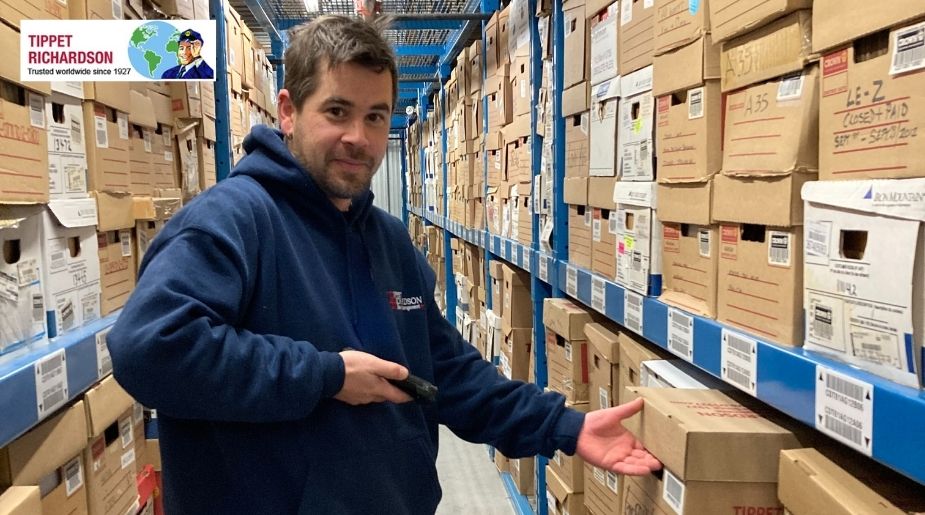
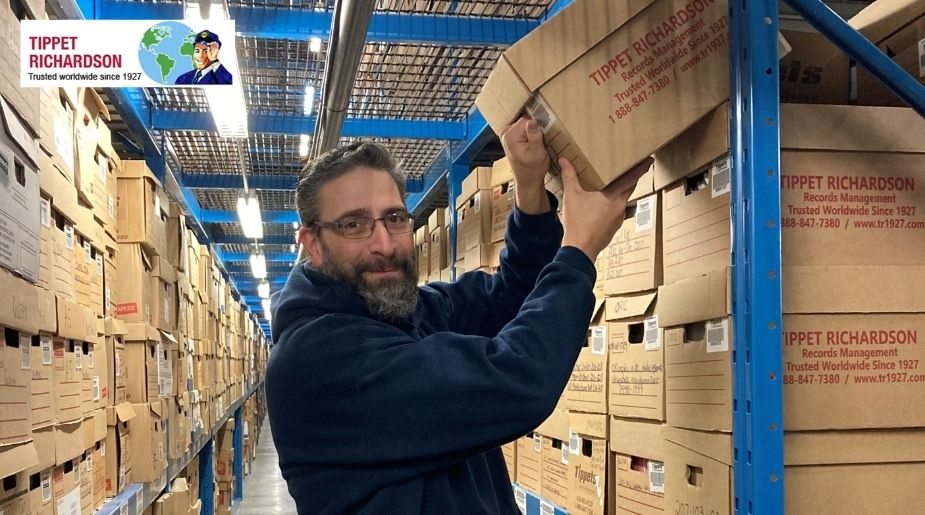
Offsite document storage allows organizations to securely store inactive records in a professional records centre designed specifically for that purpose.
Significant Cost Reduction
High-density racking systems allow thousands of boxes to be stored efficiently, dramatically reducing the cost per box compared to office space.
For most organizations, offsite storage costs a fraction of onsite storage when real estate is factored in.
Full Visibility and Chain-of-Custody
Each box is:
- barcoded and indexed
- tracked in real time throughout every movement
- stored in controlled-access facilities
This creates a complete audit trail — something most in-office and public storage environments lack entirely.
Fast Access When Needed
Records remain fully accessible:
- physical file delivery when required
- box retrieval services
- scan-on-demand for digital access
This ensures accessibility without the cost of storing everything onsite.
Why Public Storage Units Often Create Bigger Problems
At first glance, public self-storage may seem like a cost-saving alternative — but it typically introduces new risks and inefficiencies.
Costs That Escalate Quickly
Public storage is not scalable. As records grow, additional units are required — often doubling or tripling monthly costs over time.
Security and Compliance Risks
Self-storage facilities are not designed for confidential business records.
Organizations have:
- limited control over surrounding units — including unknown fire loads, hazardous materials, or activities in adjacent units that could directly impact the safety and integrity of your records
- inconsistent security measures — and employees often accessing units alone, creating personal safety risks in isolated environments with no oversight or support in the event of an emergency
- no formal records management controls
No Inventory or Audit Trail
Without a structured system, businesses often lose visibility of:
- what is stored
- where it is located
- who accessed it
- whether it was returned
Over time, this leads to disorganization, risk, and operational inefficiency.
The Role of Pack & Prep Records Management Projects
Transitioning records out of the office is often where organizations get stuck.
Years of accumulated files need to be:
- reviewed and consolidated
- properly packed and labeled
- inventoried for tracking
- securely transferred
This work is time-consuming and typically falls outside employees’ core responsibilities.
Dedicated Pack & Prep project teams:
- manage file room clean-ups
- organize and inventory records
- coordinate transfer to offsite storage
- prepare eligible documents for secure destruction
Key benefit: your team stays focused on their actual roles while specialists handle the project.
A Practical Alternative to Costly Backfile Scanning Projects
Many organizations consider scanning their entire archive — but full backfile conversions often involve:
- very high upfront costs
- long timelines
- significant internal effort
And in many cases, a large percentage of scanned files are never accessed again — resulting in a very low return on investment for a significant upfront expenditure.
Scan-on-Demand: A Smarter Approach
Instead of scanning everything upfront:
- records are stored securely
- files are digitized only when needed
This approach provides digital access without the cost of scanning thousands of rarely used documents.
When to Reevaluate Your Records Storage Strategy
The best time to address records storage is during periods of change:
- office relocations
- downsizing or space optimization
- lease renewals
- digital transformation initiatives
- file room overcrowding
These moments create a natural opportunity to reduce costs and improve efficiency.
Final Thoughts
Paper records are still a necessary part of many businesses — but where and how they are stored has a direct impact on cost, efficiency, and risk.
By transitioning inactive records to secure offsite storage, organizations can:
- reduce real estate costs
- improve organization and tracking
- free up valuable workspace
- avoid repeated handling and move costs
For businesses across Toronto and the GTA, this shift often delivers immediate operational and financial benefits.