

Why Businesses Turn to Public Storage Units
At first glance, public self-storage units can seem like a convenient and low-cost solution for storing business records.
They are widely available, easy to access, and appear to offer flexibility for organizations that need extra space quickly.
For businesses dealing with overcrowded file rooms or preparing for an office move, renting a storage unit may feel like a simple way to free up space.
However, what seems like a practical short-term solution can quickly create long-term operational, security, and cost challenges — and in many cases, introduces risks that businesses don’t fully recognize until something goes wrong.
The Problem with Treating Business Records Like General Storage
Business records are not the same as household goods or excess office furniture.
They often contain sensitive and confidential information, including:
- HR and employee records
- Financial and tax documents
- Contracts and legal files
- Client and proprietary information
These records require controlled handling, secure environments, and clear tracking — none of which are standard features in most public storage facilities.
Key Risks of Using Public Storage for Business Records
Limited Security and Oversight
While many public storage facilities offer basic security features such as gated access or cameras, they are not designed for the secure record storage of confidential business records.
Businesses typically have no visibility into:
- who is accessing nearby units
- what materials are being stored in the facility
- how security is monitored or enforced
Unlike professional records storage providers, public storage facilities do not maintain controlled access, audited handling procedures, or documented chain-of-custody processes.
No Chain of Custody or Audit Trail
One of the most significant risks is the lack of tracking and accountability.
When records are stored in a public unit, there is usually no system in place to track:
- what boxes are stored
- where specific files are located
- when records are retrieved
- who accessed them
- whether files were returned and refiled properly
Over time, this leads to disorganization, lost files, and increased risk — particularly for organizations that need to demonstrate compliance or respond to audits.
Unpredictable and Escalating Costs
Public storage units are often assumed to be a low-cost option, but in the GTA they frequently start out expensive and only get worse over time. It’s not uncommon to see rates around $700 per month for a 150 sq. ft. unit, before additional units are even considered.
As records accumulate, businesses frequently need to rent additional units. Costs can quickly double or even triple when space runs out, making public storage difficult to scale efficiently.
In contrast, professional records storage is designed to scale with your needs without requiring multiple units or fragmented storage locations.
Risk of Damage and Environmental Exposure
Public storage facilities are not specifically engineered for long-term document preservation.
Records stored in these environments may be exposed to:
- temperature fluctuations
- humidity and moisture
- dust and contaminants
- potential water damage or fire risk
Paper records are particularly vulnerable to environmental conditions, and once damaged, documents may be permanently lost.
Beyond the immediate loss, compromised or inaccessible original documents can also create reputational risk. Inability to produce critical files when requested — whether for clients, legal matters, or audits — can impact trust, credibility, and professional standing.
Employees Handling Records Improperly
(And the Hidden Cost of Doing It Internally)
Another overlooked risk is how records are transported and managed.
In many cases, employees are responsible for:
- packing and moving boxes
- transporting records in personal vehicles (which may impact or limit insurance coverage)
- retrieving and returning files without formal tracking
This approach introduces both operational and health and safety concerns. Organizations may require a buddy system when visiting storage units, pulling two employees away from their core responsibilities. At the same time, lifting and moving heavy boxes without proper equipment increases the risk of workplace injury.
Overall, this creates security risks, inefficiencies, and unnecessary strain on staff who should be focused on their core roles — turning what seems like a simple storage decision into an ongoing operational burden.
Insurance and Underwriter Concerns
Another often overlooked consideration is how business records stored in public storage are viewed from an insurance perspective.
Many commercial property policies provide limited coverage for documents stored off-premises, and in some cases, coverage for valuable papers may be restricted or subject to specific conditions.
From an underwriter’s standpoint, generic public storage units are not typically considered equivalent to professional records storage facilities, which are designed with fire protection, security controls, and formal handling procedures in mind.
This can create uncertainty around:
- whether records are adequately insured
- how losses would be assessed in the event of damage
- whether storage conditions meet policy expectations
For organizations relying on public storage, it is worth confirming coverage directly.
A practical step is to contact your insurance provider or broker to understand how your records are covered when stored in a public storage unit.
The Operational Challenges of Public Storage
Beyond security concerns, public storage often creates day-to-day operational challenges.
Without proper organization and indexing, businesses may struggle to locate files quickly. Over time, boxes are moved, stacked, and rearranged without documentation, making retrieval increasingly difficult.
This lack of structure can lead to:
- wasted time searching for files
- delays in responding to client or legal requests
- frustration for employees managing records
- broken down or damaged boxes due to improper stacking and handling
- missing or incomplete box lists, making it difficult to locate specific records
A Better Alternative: Professional Records Storage
Professional records storage facilities are specifically designed to address the risks associated with storing business documents.
Key advantages include:
Secure, Controlled Environments
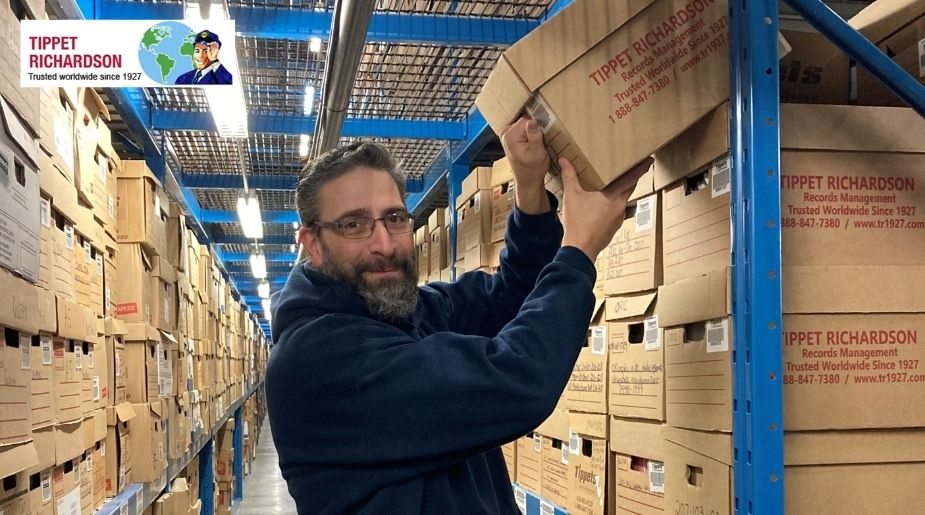
Records centres are designed with security in mind, including controlled access, monitored facilities, and structured handling procedures.
Barcode Tracking and Inventory Management
Each box is barcoded and tracked within an inventory system, providing real-time tracking, online access, and full visibility into where records are stored and when they are accessed.
Scalable Storage Without Cost Surprises
Businesses can scale storage as needed without renting multiple units or losing track of inventory across different locations.
Quick Retrieval and Scan-on-Demand
Files can be retrieved when needed or digitized through scan-on-demand services, allowing businesses to access documents quickly without storing everything onsite.
The Role of Pack & Prep Records Management Projects
For organizations currently using public storage, transitioning to a professional records storage solution often requires significant preparation.
Boxes may be unorganized, unlabeled, or inconsistently packed, making the transition more complex than expected.
Pack & Prep Records Management Project teams help businesses:
- organize and consolidate records
- create box inventories and labeling systems
- professionally pack and prepare files for storage
- coordinate secure transfer to a records storage facility
This structured approach ensures records are not only moved, but properly organized for long-term management.
When to Reconsider Public Storage
If your organization is currently using public storage for business records, it may be time to reassess your approach.
Common triggers include:
- difficulty locating files
- increasing storage costs
- upcoming office relocations or downsizing
- concerns about security or compliance
- uncertainty around insurance coverage or potential gaps in protection
Addressing these issues early can prevent more significant challenges in the future.
Need Help Transitioning Out of Public Storage?
If your organization is currently using public storage and looking for a more secure and scalable solution, a structured transition can make all the difference.
TR’s Pack & Prep Records Management Project Team can help organize, inventory, and transfer your records efficiently while maintaining full control and visibility.
Contact our team to discuss your records storage and project requirements
Final Thoughts
For many businesses, using public storage started as a practical decision — a quick way to deal with space constraints or an upcoming move.
But as records accumulate and operational demands increase, what once seemed convenient can become difficult to manage, harder to control, and more expensive than expected.
In the GTA in particular, public storage rates are already high at the outset — and escalate further as additional units are added. What begins as a quick solution can quickly become a fragmented and expensive approach, often rivaling or exceeding the cost of more structured alternatives without delivering the same level of control or security.
The good news is that these challenges are entirely solvable with the right structure and approach.
By transitioning to a professional records storage solution, businesses can improve security, gain control over their records, and ensure long-term efficiency in how documents are managed.
While public storage units may appear convenient, they are not designed for the secure and efficient management of business records.
Over time, the lack of security, tracking, and scalability can create significant risks and operational challenges.
By transitioning to a professional records storage solution, businesses can improve security, gain control over their records, and ensure long-term efficiency in how documents are managed.