

Office Moves and Document Storage Without Disruption – Records Management Planning
Office relocations are complex. Furniture, workstations, IT infrastructure, and employees all need to be moved and re-established with minimal disruption.
But one critical element is consistently underestimated: record management planning. Without a clear strategy for managing decades of documents and files, businesses risk disorganization, higher costs, and operational delays during the move. Proper record management planning ensures that every document is handled efficiently, securely, and with minimal disruption to daily operations.
Records and file management
For many organizations, years — sometimes decades — of paper records are spread across file rooms, cabinets, and storage areas. When a move is announced, these records quickly become a major operational and cost challenge.
Without a clear strategy, most businesses default to the easiest option:
Pack everything and move it
That approach can lead to higher costs, disorganized files, and valuable space in the new office being consumed by inactive records.
With proper planning, however, an office move becomes an opportunity to reduce costs, improve organization, and modernize your document storage strategy.
The Hidden Records Problem During Office Moves
Records are often one of the largest — and most underestimated — workloads in a relocation.
Organizations typically have:
- file rooms filled with archived documents
- cabinets holding historical records
- storage closets packed with banker’s boxes
- decentralized departmental file storage
When timelines tighten, these records are often packed quickly and moved without review.
This creates long-term issues:
- unnecessary boxes being relocated
- disorganized files in the new office
- inactive records consuming premium office space
- missed opportunities for secure destruction
Bottom line: moving everything is easy — but it’s rarely the right decision.
Start with a “Touch It Once” Strategy
The most effective office moves follow a simple principle:
handle each record once — and put it in its final, appropriate location.
Before moving day, records should be categorized into three groups:
- move to the new office (active records)
- transfer to offsite storage (inactive but retained)
- securely destroy (no longer required)
This approach eliminates the costly cycle of moving the same records multiple times and reduces overall relocation volume.
Reduce Moving Costs by Reducing Volume
Every box moved adds cost:
- packing labour
- transportation
- handling time
- space allocation in the new office
By removing inactive and unnecessary records before the move, organizations can reduce post-move space requirements and avoid repeated handling — while recognizing that transferring boxes to a records centre also carries costs. The real financial benefit is not always in the immediate move, but in eliminating ongoing real estate and future handling costs.
In many cases, businesses are relocating hundreds — or thousands — of boxes that will rarely, if ever, be accessed again.
Why Offsite Storage Should Be Part of Every Move Plan
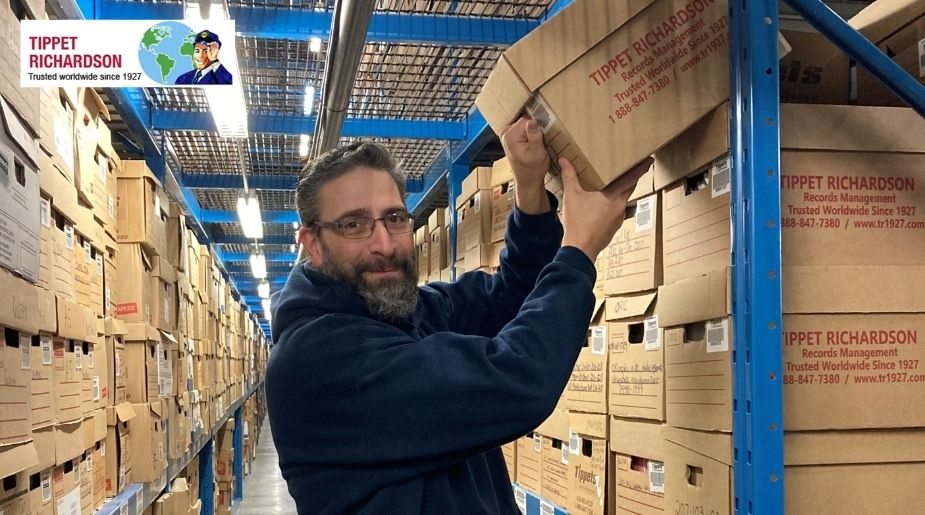
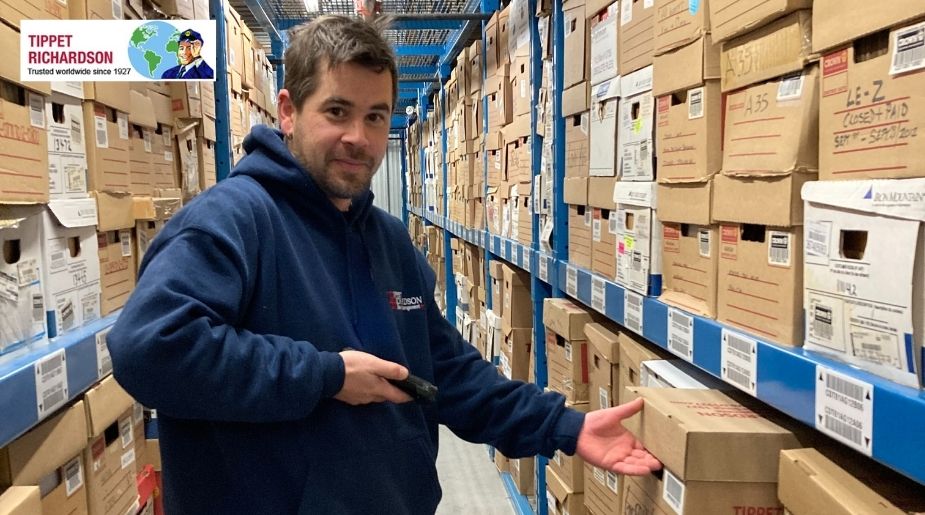
Offsite storage should be an integral part of every office move plan because it allows businesses to securely store inactive records outside the office, freeing up valuable space and reducing relocation complexity. By leveraging Tippet Richardson’s offsite records storage, organizations benefit from climate-controlled facilities, strict access controls, barcode tracking, and secure transport, ensuring that documents remain protected and easily accessible when needed. Incorporating offsite record storage into your move plan not only minimizes handling and reduces costs but also supports business continuity and efficient record management planning throughout the transition.
Office relocations are one of the best opportunities to transition inactive records out of the office entirely.
Eliminate Unnecessary Handling
Boxes transferred directly to a records centre do not need to be:
- packed for the move
- transported to the new office
- unpacked and reorganized
They are handled once — and stored properly.
Reduce Real Estate Requirements in the New Office
Office space across Toronto and the GTA is expensive. Carrying forward large volumes of archived records into a new space limits your ability to:
- reduce square footage
- repurpose space for revenue-generating activities
- design a more efficient workplace
Maintain Control and Visibility
Professional records storage includes:
- records management reports
- secure online access to your inventory and activity
- barcode inventory tracking
- real-time file movement tracking
- controlled access environments
This provides a level of visibility and accountability that is rarely achieved with in-office storage.
Maintain Business Continuity During the Move
One of the biggest risks during a relocation is loss of access to critical records.
Files can be:
- packed too early
- misplaced during the move
- difficult to locate in the new space
This impacts:
- customer service responsiveness
- internal operations
- compliance and audit readiness
With a structured records plan and offsite storage with scan-on-demand, organizations can ensure continued access to information throughout the move — including for remote and hybrid employees.
The Role of Pack & Prep Records Management Teams
Preparing records for a move is labour-intensive and often underestimated.
It requires:
- file review and consolidation
- proper packing and labeling
- inventory creation and tracking
- coordination of storage and destruction
This work typically falls outside employees’ core responsibilities and can disrupt daily operations.
Dedicated Pack & Prep project teams:
- manage file room clean-ups
- create detailed box inventories
- pack and label records professionally
- coordinate transfers to storage
- prepare documents for secure shredding
Result: your team stays focused on their roles while specialists manage the complexity.
Protecting Confidential Records During a Move
Office moves introduce risk — especially when handling sensitive information such as:
- proprietary information
- HR files
- financial records
- contracts
- client data
Without proper controls, documents can be misplaced, accessed improperly, or lost.
A structured records process includes:
- sealed and labeled boxes
- controlled handling procedures
- documented chain-of-custody
- secure transport and storage
This ensures records remain protected throughout the transition.
Don’t Miss the Opportunity for Secure Shredding
Relocations are the ideal time to eliminate records that are no longer required.
Over time, file rooms accumulate documents that have exceeded retention requirements.
Removing these records before the move:
- reduces relocation volume
- lowers storage costs
- minimizes risk exposure
When coordinated properly, secure shredding can significantly streamline the move.
Avoid the “Scan Everything” Trap
Many organizations consider full backfile scanning during a move to improve access.
However, these projects often involve:
- very high upfront costs
- long timelines
- significant internal resource demands
And many scanned records are never accessed again — resulting in a low return on investment.
A Better Alternative: Scan-on-Demand
Instead of scanning everything upfront:
- records are stored securely
- files are digitized only when needed
This provides digital access without the cost and effort of large-scale scanning projects — and supports real-time access for remote teams.
The Advantage of an Integrated Approach
Working with a single vendor for relocation, storage, and records management simplifies coordination, reduces handoffs, and improves accountability — minimizing risk and keeping the entire project aligned.
Organizations that coordinate records management alongside their move benefit from a more efficient process.
Instead of treating records as a separate issue, they align:
- relocation logistics
- file room clean-ups
- offsite storage transfers
- secure destruction
- digital access strategy
This reduces disruption, improves organization, and delivers long-term cost savings.
Final Thoughts
Office relocations are more than a logistics exercise — they are a strategic opportunity to improve how records are managed.
Organizations that take a proactive approach can:
- reduce moving costs
- eliminate unnecessary records
- free up valuable office space
- improve access and control of information
Handled properly, an office move becomes a turning point — not just a transition.