

- To move to Belgium, plan your immigration status, housing, shipping, and arrival tasks together.
- Start with the residence requirements that apply to your nationality, purpose, and length of stay.
- A detailed packing checklist helps you separate essential items from belongings better bought locally.
- Condo access, customs paperwork, storage, and delivery conditions can materially affect your moving plan.
- An experienced international moving company can coordinate packing, transport, documentation, and delivery planning.
Move to Belgium planning starts with the right immigration route, a realistic household plan, and an international moving schedule that accounts for customs and delivery conditions.
Belgium offers several distinct living environments, from Brussels and Antwerp to smaller cities and rural communities, but moving from Canada involves more than booking transport. You will need to coordinate residence documents, housing, schools or work arrangements, personal belongings, and the practical details of arriving at a Belgian address.
This guide explains how to organise each stage, what to check before shipping, and when professional international moving services can reduce avoidable complications.
How to Move to Belgium: Start with Your Relocation Plan
The most reliable Belgian relocations begin with a clear understanding of why you are moving, how long you expect to stay, and what must be ready before your household goods leave Canada. Treat the move as several connected decisions rather than one transport booking.
Confirm Your Immigration and Residence Position
Can I move to Belgium? In practical terms, the answer depends on your nationality, the reason for your stay, and its expected duration. A holiday or short visit is not the same as relocating for employment, study, family reunification, retirement, or another long-term purpose.
Requirements may also differ for Canadian citizens, permanent residents of Canada, and family members with different nationalities.
Before making firm shipping arrangements, review current information from the appropriate Belgian embassy or consulate and the municipality where you expect to live. Long-term residents generally need to follow a residence process after arrival, but the specific application, documents, deadlines, and supporting evidence depend on the individual situation.
Do not assume that permission to enter Belgium automatically permits you to settle there or work; keep this in mind when you move to Belgium.
Keep copies of passports, civil-status documents, employment or study evidence, insurance information, and any approvals in both digital and paper form. Ask the relevant authority whether documents require legalisation, an apostille, certified translation, or another form of verification. These requirements can change and should be confirmed before departure.
Decide What “Move” Means for Your Household
A move to Belgium may be permanent, open-ended, or for a defined assignment. That distinction affects how much you ship and whether storage in Canada makes sense.
A family relocating indefinitely may send furniture and personal effects, while someone beginning a one-year assignment may ship only essentials and leave seasonal or sentimental items in secure storage.
Make an early inventory with four categories: ship, store, sell or donate, and carry personally. Include approximate dimensions for large furniture, photographs of valuable pieces, and notes about condition.
This makes it easier to identify items that may be expensive to move, difficult to place in a Belgian home, or unsuitable for the new property; keep this in mind when you move to Belgium.
A useful example is a Canadian household moving from a detached home into a Brussels apartment. The dining table may be important, but its size could create access problems in a stairwell or lift.
Measuring the table is only the first step; you should also confirm doorway widths, lift dimensions, building rules, and whether a permitted unloading area is available; record this when you plan to move to Belgium.
Set a Working Schedule Before Booking
Your schedule should include residence planning, housing, school or employment commitments, packing, shipment preparation, travel, and the period between arrival and delivery. International transport involves more stages than a local move, so a date that looks reasonable on a calendar may not leave enough room for documentation or changes.
Avoid selecting a shipping date before you understand your destination address. If your Belgian accommodation is not ready, ask about temporary storage options and how delivery will later be arranged.
Confirm what is included in any estimate, including packing, collection, storage, destination services, unpacking, and removal of packing materials; review this before you move to Belgium.
The scope can vary between providers and shipments.
Requesting a free moving quote early gives you a chance to discuss volume, access, timing, storage, and special items before decisions become urgent.
Tippet Richardson can assess the household details required for an international residential move and help you build a more realistic plan; review this before you move to Belgium.
Build a Belgium Packing Checklist That Reduces Risk
Packing for international moving is not simply a larger version of packing for an apartment move. Items may be handled several times, remain packed during different stages of transport, and be inspected or documented before delivery. The best packing checklist therefore considers value, durability, use, access, and destination suitability.
Sort by Use, Risk, and Replacement Value
Begin with the items you will need during the first weeks in Belgium: documents, medication, clothing, chargers, toiletries, basic kitchen items, children’s essentials, and a small quantity of familiar belongings. Keep these with you where permitted and practical rather than placing them in the shipment.
Follow airline and border rules for anything carried personally; confirm this before you move to Belgium.
Next, separate items that require special attention. These may include artwork, antiques, musical instruments, fragile glassware, collections, electronics, photographs, and furniture with delicate finishes. Record descriptions and photographs before packing. For valuable belongings, retain appraisals, receipts, provenance documents, or insurance records where available.
Ask the moving company how such items should be declared and documented; review this before you move to Belgium.
Do not pack prohibited or restricted goods without checking first. Food, plants, seeds, alcohol, medication, batteries, firearms, aerosols, flammable products, and some animal-related items may be subject to specific rules. Customs and import requirements can vary according to the item and its origin.
A professional mover can explain the documentation needed for the shipment, but you remain responsible for providing accurate information.
Consider the Differences Between Canadian and Belgian Homes
Canadian houses often provide more storage and larger rooms than city apartments in Belgium. Before shipping bulky furniture, compare its dimensions with the destination floor plan. Pay particular attention to wardrobes, sectional sofas, exercise equipment, large appliances, and outdoor furniture; plan for this if you move to Belgium.
Electrical equipment deserves an honest review. Plug shapes, voltage, frequency, and compatibility may differ, and an adapter is not always enough. Check manufacturer information before shipping appliances or sensitive equipment.
Some items may be safer and more practical to replace after arrival, especially if repair or warranty support would be difficult abroad.
An apartment moving checklist should also include access information. Ask the building manager or landlord about lift reservations, stair access, delivery hours, parking, narrow streets, loading restrictions, and whether a lift reservation or street permit is needed. Do not assume that a truck can stop directly outside the building.
In central Brussels, Antwerp, Ghent, or other dense areas, the final approach may require careful coordination; plan for this if you move to Belgium.
Pack for the First Days, Not Just the Final Delivery
Prepare a clearly identified arrival case or set of cartons for the period before your shipment reaches the residence. Include weather-appropriate clothing, essential paperwork, basic cooking or eating items, towels, linens, children’s comfort items, and a simple tool kit if permitted.
Keep an inventory of what travels with you and what is in the shipment; keep this in mind when you move to Belgium.
Label cartons by room and priority, but do not rely on labels alone. Use an inventory that identifies contents in plain language. “Kitchen 4” is less useful than “everyday plates, mugs, and cutlery.” Good descriptions support unpacking and make it easier to identify missing or damaged items.
Professional packing can be particularly valuable for fragile or high-value belongings. At Tippet Richardson, our specialists can discuss which items need custom protection, which can be packed conventionally, and which should be excluded or carried separately.
The correct approach is not to pack everything in the same way; it is to match the packing method to the item and the journey.
Choose an International Moving Company with the Right Questions
Choosing an international moving company is a decision about process control, communication, and accountability as much as transport. A low initial price may not represent the full service if packing, storage, destination delivery, access arrangements, or special handling are excluded.
Compare the Scope, Not Just the Estimate
Ask each company to explain what the estimate covers and what could create an additional charge.
Important points include the packing method, collection conditions, shipment volume, storage, documentation support, destination delivery, unpacking, stair or lift access, and handling of large or fragile items; plan for this if you move to Belgium.
Clarify how the volume is assessed. A household goods survey, in-home visit, or detailed virtual assessment can reveal furniture dimensions, access limitations, and items that need special preparation.
An estimate based only on a short list may change when the crew sees the actual contents; add this to your plan to move to Belgium.
You should also ask how communication works. Identify who answers questions before packing, who confirms the collection, and how you will receive updates during the move. Confirm the process for reporting damage or missing items and review the valuation or protection options offered.
Terms differ, so read the documents carefully rather than assuming that standard household insurance covers every stage of an international shipment.
Look for Experience with Residential Moves to Belgium
Belgium is not one uniform destination. A delivery to a detached home outside a smaller city may be straightforward, while a city apartment may require advance planning for restricted streets, lifts, stairs, parking, or building access.
A capable provider should ask about the actual destination property rather than treating the country as the only relevant detail; confirm this before you move to Belgium.
Share information about the residence as soon as you have it. A floor plan, photographs of entrances, building rules, lift measurements, and local contact details can help the moving team identify issues before the shipment is on its way.
If the address is not final, explain what is known and what remains uncertain.
Tippet Richardson has supported residential moving and storage needs for generations, including international residential moves where the service is appropriate.
Our role is to help you understand the practical choices, prepare the household correctly, and coordinate the move around your circumstances rather than provide a generic checklist alone; confirm this before you move to Belgium.
Be Careful with Promises That Sound Too Precise
International moves can be affected by document review, port or carrier schedules, customs procedures, weather, address access, and changes at either end. A responsible provider should explain the expected process and variables without presenting an uncertain date as a guarantee.
Be cautious if an estimate omits important assumptions, a representative cannot explain destination arrangements, or you are encouraged to ship before confirming that the goods can be imported. Ask for written clarification of responsibilities.
The strongest relationship is based on a shared understanding of what you must provide, what the mover coordinates, and which matters depend on authorities or third parties; plan for this if you move to Belgium.
Evaluate The Full Service Before Choosing A Mover
A well-defined scope is usually more valuable than a superficially low estimate. Compare the protection, packing quality, communication, storage options, destination planning, and experience relevant to your type of household. This is especially important when the shipment includes heirlooms, art, fragile goods, or furniture that must fit a particular apartment.
What Happens During Customs, Transport, and Delivery?
Understanding the stages after packing helps you prepare documents and make better decisions about timing. Your shipment may pass through collection, export preparation, transport, arrival processing, import review, destination delivery, and unpacking.
The order and duration can vary by shipment, route, season, and official procedures; check this early if you move to Belgium.
Prepare Accurate Shipment Information
Create a complete inventory with useful descriptions and realistic values where requested. Avoid vague terms such as “miscellaneous” when a more specific description is possible. Customs documentation may require information about ownership, origin, quantity, value, and intended use. Incorrect or incomplete information can delay review or require clarification.
Keep your passport information, residence documents, inventory, receipts, and any requested approvals accessible. Do not place irreplaceable documents in the household shipment. Ask the moving company what documents it needs from you and by what date.
Requirements may vary depending on your nationality, residence category, shipment contents, and Belgian entry arrangements, so verify current rules with the relevant authorities; confirm this before you move to Belgium.
Plan for Delivery to the Actual Address
Delivery planning begins before your goods leave Canada. Confirm the full address, contact person, telephone details, floor level, lift access, parking conditions, and any building restrictions.
If you are moving into a rented apartment, ask the landlord or property manager how deliveries are scheduled and whether the building has specific hours; check this early if you move to Belgium.
In older European buildings, the entrance may be narrow, stairs may turn sharply, and lifts may be too small for certain furniture. A piece that left a Canadian house without difficulty may need extra handling at the destination.
If an item cannot fit through the available route, you may face a decision about temporary storage, alternative access, or removal. Discuss these possibilities in advance rather than waiting for delivery day; keep this in mind when you move to Belgium.
If your home is not ready, confirm how storage will work and whether a second delivery involves new access planning. Storage can be useful, but it adds another stage and cost consideration. It is best used deliberately, not as an emergency response to an unconfirmed address.
Keep Essentials Available During the Transition
The gap between departure and delivery is easier to manage when you have planned for it. Keep enough clothing, medication, work equipment, children’s necessities, and basic household items for the expected transition; add this to your plan to move to Belgium.
If you need specialist equipment immediately, confirm how it will travel and whether replacement or local purchase is practical.
Maintain a simple record of shipment references, contacts, documents, and important dates. Save copies offline in case you cannot access an online account. This small step is particularly useful when moving between temporary accommodation and a permanent address.
Settle into Belgium Without Losing Track of the Practical Details
Arrival is not the end of the move. The first weeks often involve registering locally, arranging utilities and communications, learning building procedures, and establishing daily routines. Some of these tasks depend on your residence status and municipality, so use official local guidance for current requirements.
Prepare for Your First Month
Create an arrival folder with your identity documents, residence information, lease or purchase records, employment or study documents, insurance details, medical information, and moving paperwork. Keep it organised while you are still unpacking.
You may need different documents for different appointments, and replacing missing paperwork from abroad can be time-consuming; plan for this if you move to Belgium.
Make a short list of immediate priorities: a local address, essential utilities, mobile or internet access, transport arrangements, healthcare questions, school matters, and banking needs. The exact sequence depends on your circumstances and should be confirmed with Belgian authorities or qualified advisers.
A moving company can help with shipment-related questions, but it cannot replace immigration, tax, legal, or financial advice; discuss this before you move to Belgium.
Handle the First Delivery Methodically
Before the crew arrives, clear the intended paths and confirm where cartons should go. Keep your inventory available and inspect high-value or fragile items as they are unpacked. If something appears damaged, record the condition promptly and follow the mover’s written reporting process.
Photographs, carton numbers, and clear descriptions are more useful than a general statement that something is wrong.
Do not rush to discard packaging from valuable items until you understand the reporting requirements. Once the essential rooms are usable, unpack by function rather than by carton order.
Bedrooms, bathrooms, and basic kitchen supplies usually create more comfort than opening decorative boxes first; discuss this before you move to Belgium.
Learn from the Realities of the New Home
A move often reveals practical differences that were difficult to predict from Canada. Storage may be limited, recycling procedures may differ, and furniture placement may be constrained by radiators, windows, staircases, or room proportions. Give yourself time to learn the property before buying replacements or arranging permanent storage solutions.
For households making a temporary move, keep a record of what remains in Canadian storage and review it periodically. For a permanent move, revisit the items you did not ship once you understand the size and character of your Belgian home.
A thoughtful second decision is usually better than sending everything immediately.
A move to Belgium becomes more manageable when the transport plan, residence plan, and home plan support one another. Clear records, realistic timing, accurate inventories, and early communication remove many of the avoidable surprises that make an international relocation stressful.
The Canadian moving services market was valued at USD 9.06 billion in 2024 and is projected to reach USD 14.08 billion by 2033, expanding at a compound annual growth rate (CAGR) of 5.05% during the forecast period.
Wrapping Up
To move to Belgium with fewer surprises, begin with the correct residence information, then build a household inventory around your actual home, schedule, and priorities. Confirm what you can carry, ship, store, or replace; prepare accurate documentation; and check the destination property before committing to delivery arrangements.
A detailed packing checklist is useful, but it works best when supported by realistic access planning and clear communication.
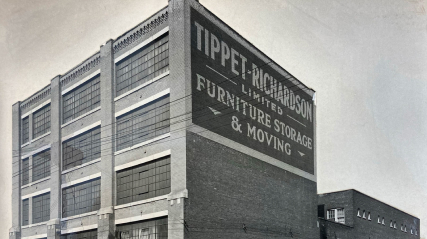
International moving services can be especially valuable when your shipment includes fragile belongings, large furniture, storage requirements, or a challenging apartment delivery. Tippet Richardson brings nearly a century of moving experience to residential relocation planning, including international moves where the service is suitable.
If you are deciding how to move to Belgium, an early conversation can help you understand the scope of work, prepare your household, and take the next step with greater confidence.