- A successful long distance relocation starts with an early, detailed plan rather than moving-day decisions.
- Moving costs depend on shipment size, distance, services, timing, access, storage, and special handling needs.
- A room-by-room inventory helps long distance moving companies prepare a more accurate quote and schedule.
- Packing, storage, building access, and delivery details should be arranged together when the move has multiple stages.
- The right long distance moving company should provide clear communication, careful handling, and realistic expectations.
A long distance relocation is easiest when you combine early planning, accurate inventory information, suitable packing, and clear communication with your moving company.
This guide explains how to prepare, what affects your move and its cost, how storage can help, and what to look for when comparing long distance moving companies in Canada.
Distance changes the nature of a move. A local move may allow you to correct a missed detail quickly, while a move between provinces or across a much greater distance requires decisions to be made well before collection day.
Condo rules, winter weather, home access, delivery timing, fragile belongings, and temporary storage can all affect the plan.
Planning a Long Distance Relocation from the Start
The strongest long distance relocations begin with a realistic picture of what is moving, where it is going, and when it needs to arrive. Before requesting estimates, think through the full journey rather than focusing only on the collection date.
That early preparation helps you compare services fairly and reduces last-minute changes.
Establish Your Moving Window
Start by identifying the dates that are fixed and the dates that have some flexibility. A closing date, lease end, school start, employment start, or possession date may determine when your household goods can leave or arrive.
If your dates do not align, ask about options that may include storage between collection and delivery; include this in your long distance relocation timeline.
Avoid treating a preferred delivery date as guaranteed until it has been discussed and confirmed for your specific route and shipment.
Longer moves involve more variables than a short local transfer, and the available service arrangement can depend on the origin, destination, shipment size, season, and access conditions; include this in your long distance relocation timeline.
If you are moving from Toronto or another busy Ontario location, consider how the collection date interacts with elevator reservations, loading zones, street access, and building rules. A move can be delayed before the vehicle leaves simply because an elevator booking was not secured or a loading area was unavailable.
Decide What Is Worth Moving
Distance makes unnecessary items more expensive to carry, but replacing useful belongings at the destination can also cost more than expected. Review each room and separate items into four groups: move, donate, sell, and discard.
Include basements, garages, storage lockers, balconies, and seasonal equipment in the review; include this in your long distance relocation timeline.
Be especially careful with items that are large but low in value. A heavy piece of furniture may require additional labour, protective materials, and space that could be better used for belongings you genuinely need.
On the other hand, sentimental, custom-made, or difficult-to-replace items may be worth moving even when their resale value is limited.
An accurate inventory does not need to be complicated. Record the item, approximate size, condition, and any special concern. Note whether something is fragile, unusually heavy, dismantlable, temperature-sensitive, or difficult to access. Photographs can be useful for your own records and for explaining unusual items during the quoting process.
Build a Working Document
Keep one moving file, whether digital or printed, containing your inventory, contact details, building instructions, important dates, storage information, and questions for the moving company. Update it as decisions change; keep this visible throughout the long distance relocation.
Your file should also identify items that should travel with you rather than inside the moving shipment. This may include passports, medications, jewellery, essential documents, keys, chargers, a few days of clothing, and items needed immediately after arrival. A long-distance shipment is not a substitute for a personal travel bag.
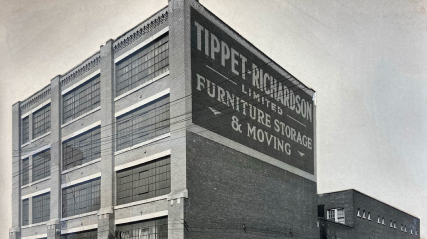
At Tippet Richardson, our experience since 1927 has shown that clear information early in the process is one of the most useful forms of preparation.
The more accurately the move is described, the easier it is to discuss the appropriate service and avoid surprises caused by missing details; this matters in a long distance relocation.
What Should You Expect from Long Distance Moving Companies?
Comparing long distance moving services is not simply a matter of choosing the lowest estimate. You are assessing how well each company understands your move, explains its service, manages risk, and communicates when circumstances change.
A useful comparison looks at the entire experience from the first discussion through delivery and final placement.
Compare the Scope of Service
Moving companies may offer different combinations of packing, loading, transport, storage, unpacking, furniture placement, and specialty handling. Make sure you understand what is included in the proposal and what remains your responsibility; confirm this early for a long distance relocation.
For example, a basic moving service may suit someone who has packed and labelled everything carefully. A full packing service may be more appropriate when time is limited, fragile possessions need specialist attention, or the household includes a large number of items that require methodical preparation.
Neither option is automatically better; the right choice depends on your time, budget, belongings, and tolerance for managing the details yourself; build this into the long distance relocation plan.
Ask how the company approaches items such as artwork, mirrors, antiques, musical instruments, electronics, fitness equipment, large wardrobes, and delicate furniture. You should also identify items that may need disassembly or preparation before they can be moved safely.
Ask How the Estimate Is Built
A useful estimate should be based on meaningful information about the shipment and the move.
Depending on the service, relevant factors may include the volume or weight of the goods, the distance, packing requirements, access at both properties, stairs, elevators, long carries, storage, and special handling; plan for this during a long distance relocation.
When comparing long distance moving company cost, do not compare two figures unless you understand the assumptions behind each one. One estimate may assume that everything is packed, labelled, and ready at ground level. Another may include packing, difficult access, or storage.
A lower initial figure is not necessarily lower once missing services are added.
Ask which details could change the estimate. For example, a substantial increase in the number of boxes, a change in pickup or delivery access, or a request for additional packing may affect the final charge.
Written clarity is more valuable than a seemingly precise number based on incomplete information; treat this as part of the long distance relocation.
Assess Communication and Accountability
Pay attention to how questions are handled before you commit. A professional conversation should help you understand the process, identify risks, and make decisions. Be cautious if your questions about access, timing, storage, damaged items, valuation, or changes to the shipment are dismissed or answered vaguely.
Ask who will be your main point of contact and how updates will be provided. You should know what information the company needs from you, what you need to confirm with your buildings or destination property, and what happens if a date or access arrangement changes.
This does not mean every part of a long distance relocation can be predicted perfectly. Weather, road conditions, building restrictions, and destination readiness can affect a move. Good communication cannot remove every variable, but it can make the process more manageable and help you respond sooner.
Preparing Your Home and Belongings for the Journey
Packing for a long distance relocation is different from packing for a short trip across town. Items may be handled at more than one point, remain packed for longer, or be exposed to different conditions during transport and storage.
Preparation should therefore focus on protection, identification, and practical access at the destination.
Choose Between Self-Packing and Professional Packing
Self-packing can give you greater control and may suit an organised household with enough time. It requires more than putting items into boxes.
Boxes need to be strong enough for their contents, correctly sized, securely closed, and labelled so that the destination team can work efficiently; this matters in a long distance relocation.
Professional packing can reduce the physical workload and may be particularly useful for fragile kitchens, artwork, collections, large homes, or moves with a demanding schedule. Experienced packers can also identify when an item needs more than standard wrapping or when a custom protective method is appropriate.
If you pack yourself, avoid mixing heavy and delicate items in the same box. Do not leave empty space around breakables, but avoid overfilling boxes so that pressure damages the contents.
Mark boxes according to room and priority, not only by a general label such as “miscellaneous”; treat this as part of the long distance relocation.
Protect Fragile and High-Value Belongings
Create a separate list of items that require special attention. Include valuable furniture, artwork, glass, ceramics, family heirlooms, instruments, electronics, and anything with an unusual shape or fragile finish. Tell the moving company about these belongings before the estimate is finalised.
Photograph valuable or delicate items before they are packed, including existing marks or wear. This is not a substitute for understanding the moving company’s valuation or claims process, but it provides a useful personal record. Keep appraisals, receipts, and ownership documents separately when available.
Some items should not be packed in the regular household shipment. Examples can include flammable materials, certain chemicals, perishable food, and other restricted goods.
Requirements can vary by route and service, so ask the moving company about any item you are unsure about rather than assuming it can be transported; confirm this early for a long distance relocation.
The Canadian moving services market was valued at USD 9.06 billion in 2024 and is projected to reach USD 14.08 billion by 2033, expanding at a compound annual growth rate (CAGR) of 5.05% during the forecast period.
Prepare Appliances, Furniture, and Electronics
Ask in advance whether appliances need to be disconnected, drained, defrosted, or prepared by a qualified person. Washing machines, refrigerators, freezers, and certain appliances may need specific preparation before they can be moved. If a manufacturer or installer recommends a particular procedure, follow that guidance.
Back up computers and other important devices before packing them. Keep cables, remotes, and small parts together and label them clearly.
If furniture is dismantled, place hardware in a sealed and labelled bag that stays with the item rather than in an unmarked box; plan for this during a long distance relocation.
A common mistake is to focus on the contents while overlooking the route out of the home. Measure large furniture against doorways, stairwells, corridors, elevators, and tight turns. In Toronto condos and older homes, access can be more restrictive than the rooms themselves.
Identifying this before moving day gives the team time to plan a safer method; confirm this early for a long distance relocation.
Organise the First Few Days at Your Destination
Prepare an arrival box or group of boxes containing bedding, towels, basic kitchen items, toiletries, cleaning supplies, simple tools, chargers, and essential documents. Label these items clearly and tell the moving team where they should be placed if the service includes room placement.
If you are moving during colder months, consider how cold temperatures may affect certain belongings and whether the destination home will be heated and ready. If the property is not ready, discuss storage rather than allowing a shipment to arrive before you can receive it.
Managing Long Distance Moving and Storage Together
Storage can make a long distance relocation more flexible, but it should be treated as part of the move plan rather than an afterthought.
It may be useful when possession dates do not match, a home is being renovated, a family member needs time to settle, or you are reducing the household in stages.
When Storage May Be the Right Choice
Short-term storage can bridge a gap between leaving one property and entering another. It can also prevent rushed decisions when the destination home is not ready or when construction, closing delays, or an unexpected change affects the move.
Longer storage may suit households that are relocating in stages, downsizing gradually, or arranging a destination property over time. Before choosing this approach, consider which items you will need during the storage period.
Keep essential documents, medication, work equipment, seasonal necessities, and irreplaceable personal items accessible wherever possible; this matters in a long distance relocation.
Storage is not automatically the cheapest option. It adds handling and time, so compare the cost and inconvenience of storage with the cost of changing dates, making temporary purchases, or moving items twice.
The value often comes from reducing pressure and allowing the household to move in a more controlled sequence.
Confirm What the Storage Arrangement Includes
Ask how items will be inventoried, protected, accessed, and released for delivery. Confirm whether the storage period is estimated or fixed, how changes are handled, and what information is needed before delivery can be arranged.
You should also clarify whether the same packing standards apply to items entering storage and whether any belongings require additional protection.
A piece that is suitable for a direct move may need more careful preparation if it will remain packed for an extended period; this can affect a long distance relocation.
Keep your own inventory and photographs. If you need one particular item during storage, identify it before collection. Searching through a packed shipment later is more difficult than setting aside a clearly labelled essentials group at the beginning.
Coordinate Collection, Storage, and Delivery
The more stages a move has, the more important the sequence becomes. Confirm the collection location, storage destination, final delivery address, contact person, access arrangements, and any restrictions at each property.
For a multi-stage move, maintain one written list of changes. A new address or revised date should be shared promptly with the moving company and anyone responsible for building access.
Do not assume that updating one person automatically updates every part of the move; this can affect a long distance relocation.
Tippet Richardson can discuss residential moving and storage solutions requirements in the context of the complete move plan.
The practical objective is to match the service arrangement to your circumstances, whether that means a direct move or a move with time between collection and delivery; plan for this during a long distance relocation.
Choosing Among Long Distance Moving Companies in Canada
The best long distance moving company for one household may not be the best choice for another. Your route, shipment size, access, timing, packing needs, storage requirements, and belongings should shape the decision.
A company that asks detailed questions is more likely to understand the work involved than one that provides a quick figure without exploring the move; build this into the long distance relocation plan.
Questions Worth Asking Before You Choose
Ask whether the company handles your origin and destination locations, what information is required for an estimate, and which services are available for your type of residential move. Confirm whether packing, storage, specialty handling, and delivery placement are included or priced separately.
Also ask about:
- How the company records the inventory and updates changes.
- How collection and delivery timing are discussed for your route.
- What preparation is required for buildings, elevators, parking, and large items.
- How valuation, damage reporting, and claims information are explained.
- Who will answer questions before, during, and after the move.
A reputable provider should be willing to explain limitations as well as capabilities. Clear answers about what cannot be promised are more useful than broad assurances that overlook the details of your move; this can affect a long distance relocation.
Understand the Main Cost Factors
People often search for long distance moving company cost as though there should be one standard price. In practice, the cost depends on the specific shipment and service plan.
Important influences may include the amount being moved, the distance, the season, the level of packing, the number of collection or delivery locations, difficult access, storage, and the handling of unusual or fragile belongings.
The most effective way to improve cost clarity is to provide complete information early. Mention a second-floor walk-up, a narrow driveway, a long distance from the vehicle to the entrance, a condo elevator, a storage locker, or a large safe before the estimate is prepared.
Omitting a difficult detail may create a less useful estimate and a more difficult moving day; keep this visible throughout the long distance relocation.
Be wary of making a decision solely on an initial price. Compare the service scope, communication, preparation requirements, and assumptions behind each proposal. A suitable plan may cost more than a basic transport-only option but save you time, reduce physical strain, and provide better protection for important belongings.
Plan for Toronto and Ontario Access Conditions
Toronto moves often involve building rules, reserved elevators, limited loading areas, traffic, street parking restrictions, and tight access. Older homes may have narrow staircases, uneven steps, low doorways, or additions that complicate furniture removal. These details should be discussed before collection day; build this into the long distance relocation plan.
Contact the building manager, superintendent, landlord, or property representative early. Ask about elevator reservations, loading instructions, parking permits, move-in or move-out hours, insurance documentation if required by the building, and rules for protecting shared areas. Requirements vary by property, so confirm them directly rather than relying on a neighbour’s experience.
At the destination, repeat the process. A clear arrival plan is especially important when you are moving to a condo, a controlled-access building, or a neighbourhood where vehicle access is limited. A well-prepared move reduces waiting, unnecessary handling, and pressure on everyone involved.
Wrapping Up
A smooth long distance relocation depends on decisions made before the boxes are loaded. Start with a realistic inventory, establish your dates, separate essential items, assess access at both properties, and decide whether professional packing or storage would make the move easier.
Then compare moving companies based on service scope, communication, preparation, and the assumptions behind the estimate—not price alone.
For households moving across Ontario, between provinces, or to another Canadian destination, the details matter. Condo procedures, older homes, fragile belongings, seasonal conditions, storage gaps, and destination readiness can all affect the plan. Addressing these issues early gives you more control and a clearer understanding of the work involved.
Tippet Richardson has supported Canadian families with moving and storage since 1927. If you are considering a long distance relocation, our team can help you discuss the practical requirements of your move and identify the information needed for a more useful quote.
Your next step is to prepare your inventory, confirm your moving window, and speak with an experienced moving professional before the schedule becomes urgent.