- Living in Etobicoke suits many households with its established neighbourhoods, green space, transport connections, and access to Toronto.
- A smooth local move depends on checking parking, elevator access, stairs, building rules, and handover timing before moving day.
- Choose Etobicoke movers for careful handling, clear communication, and experience with houses and condominiums.
- A short move may still require storage Etobicoke planning when possession dates do not align or a home needs staged furnishing.
- The right local moving services reduce delays by matching the crew, vehicle, packing support, and move plan to the property.
Living in Etobicoke can be an excellent choice, but a smooth local move depends on planning the property, building access, timing, and belongings before moving day.
Whether you are moving within Etobicoke, arriving from another part of Toronto, or comparing Etobicoke with Mississauga, the details of the move matter as much as the distance.
Etobicoke includes a wide range of housing types and neighbourhood settings, so a move from one address to another may involve very different practical challenges.
This guide explains how to assess the area, prepare for a local move, compare moving companies Etobicoke residents may consider, and decide whether packing or storage support will make your move easier.
Living in Etobicoke: What Should You Consider Before Moving?
Living in Etobicoke means choosing from a broad mix of established residential streets, condominium communities, rental buildings, family homes, and properties close to major roads or transit routes.
That variety is one of the area’s strengths, but it also means that no two local moves should be planned in exactly the same way.
Before selecting a moving date or requesting an estimate, look beyond the number of kilometres between addresses. The more useful questions are: What type of property are you leaving?
What type are you entering? Can the moving vehicle park close to each entrance? Are there stairs, narrow corridors, restricted lifts, or fragile items that need additional preparation?
Is Etobicoke a Good Place to Live?
When living in Etobicoke, the building and surrounding area can matter equally. For many people, yes. The answer depends on the neighbourhood and on what you want from daily life.
Etobicoke is often attractive to people who want access to Toronto while preferring a less central residential setting. Different parts of the area offer different balances of green space, housing styles, shopping, schools, road access, and transit connections.
The practical decision is not simply whether Etobicoke is a good place to live. For Canadians considering living in Etobicoke, neighbourhood choice shapes daily routines. It is whether the specific neighbourhood and property suit your routine.
A household that values a detached home, a quieter street, and outdoor space may assess the area differently from someone prioritising a condominium, a shorter commute, or access to local moving services without a car.
When viewing a new home, consider the move itself as part of the decision. A building with a long internal corridor, limited visitor parking, or tightly controlled elevator bookings may be perfectly suitable, but these details should be understood early.
When living in Etobicoke, the building and surrounding area can matter equally. They affect the moving plan, the time required on site, and whether packing or temporary storage would be useful.
Understanding Etobicoke Neighbourhoods and Property Types
Etobicoke neighbourhoods are not interchangeable. Some moves involve older houses with narrow driveways, mature landscaping, basements, and multiple staircases. Others involve high-rise or mid-rise condominiums with loading areas, concierge procedures, reserved elevators, and specific move-in windows. For Canadians considering living in Etobicoke, neighbourhood choice shapes daily routines.
A professional assessment should account for the actual path that furniture and cartons will take. A large sofa may fit comfortably in a room but become difficult at a stair turn or lift entrance.
A move from a house may require more walking between the truck and the door than expected if the driveway is not accessible.
Homes and neighbourhoods can create very different experiences of living in Etobicoke. These are practical details that can influence the crew size, equipment, packing method, and estimated time.
If you are still comparing properties, ask building management about move-in and move-out rules before committing. Confirm whether the building requires insurance documents, a deposit, a certificate, a booking fee, or a specific time slot.
Requirements vary by building, so they should be checked directly with management rather than assumed. For Canadians considering living in Etobicoke, neighbourhood choice shapes daily routines.
Planning Local Moving Services Around Your Property
Local moving services are most effective when the plan reflects both addresses rather than treating the move as a simple collection and delivery.
In Etobicoke, the access arrangements at each property can determine whether the day runs smoothly or becomes a series of avoidable delays. Homes and neighbourhoods can create very different experiences of living in Etobicoke.
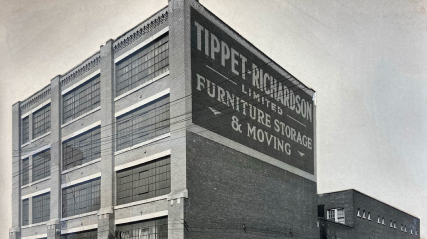
At Tippet Richardson, our coordinators look at the complete move rather than focusing only on the inventory. The purpose is to identify decisions that need to be made before the crew arrives, especially where building access, fragile possessions, parking, or timing may affect the work.
Start with a Detailed Home Inventory
A reliable inventory does more than estimate volume. It identifies furniture that needs disassembly, artwork or mirrors that need protection, appliances that require preparation, and items that should not be placed in a standard moving carton.
Preparing for living in Etobicoke includes deciding which furnishings suit the new home. It also helps you decide what is moving, what is being donated, and what may need temporary storage.
Be specific about large or delicate pieces. A piano, antique cabinet, glass dining table, stone surface, oversized sectional, or large collection of framed art may require a different handling approach from ordinary household furniture.
Mentioning these items before the estimate gives the moving team a better opportunity to plan protection and access.
It is equally important to identify items that will not travel with the household move. For households planning living in Etobicoke, a precise inventory supports careful decisions.
Hazardous materials, perishables, and certain restricted items may not be suitable for transport. If you are uncertain about a particular possession, ask the moving company during the planning stage rather than leaving the question until moving day.
Confirm Access at Both Addresses
For a condominium, ask the property manager or concierge about the moving elevator, loading area, move-in hours, parking restrictions, and any paperwork. Record the reservation details and share them with the moving coordinator.
For households preparing for living in Etobicoke, building access deserves close attention. If the building permits moves only during certain windows, the collection and delivery schedule must be built around those limits.
For a house, inspect the driveway, front walk, side entrance, stairs, and distance from the likely parking position to the door.
Construction, parked vehicles, snow, landscaping, or a narrow street can change the practical access even when the property appears straightforward during a viewing. Property access can influence the practical start of living in Etobicoke.
A useful pre-move check includes:
- The width and height of entrances, corridors, staircases, and lifts.
- The location and timing of parking or loading access at both addresses.
- Any building rules, documents, deposits, or reserved time windows.
- Items requiring disassembly, special protection, or extra handling.
Build the Timing Around Reality
A local move is not automatically a quick move. Time is affected by the amount being moved, preparation, access, stairs, lift availability, traffic, parking, and whether the old property must be cleared before the new one can be entered.
Preparing for living in Etobicoke is easier with a written timeline.
If you are buying or selling, keep the possession and key-release arrangements separate from your assumptions about when the movers can begin.
A delay in receiving keys can affect the entire day. Where the dates do not align, storage may protect you from rushing, overfilling a temporary home, or paying for repeated handling.
The best plan includes a little resilience. That does not mean adding unnecessary time or expense. For households considering living in Etobicoke, early decisions can protect valuable time.
It means identifying which parts of the day are fixed and which can move if access, keys, or building procedures take longer than expected.
Making a Condo or House Move in Etobicoke Easier
The most useful preparation is property-specific. A household moving between two houses needs a different approach from a resident leaving an apartment for a condominium.
The following practices address the problems that most often create stress on local moving days. If you are considering living in Etobicoke, check how larger furniture reaches the home.
Condo Moves Require Coordination Before Packing
Condominium moves often depend on a booking rather than simply arriving at the building. Confirm the move window in writing, ask where the vehicle should wait, and check whether the elevator must be padded or operated by building staff. Keep the relevant instructions available on the day.
Measure the largest items where access is uncertain. Elevator dimensions alone may not tell the full story; door openings, corridor turns, protective coverings, and the route from the loading area can all matter.
For households planning living in Etobicoke, a precise inventory supports careful decisions. If a piece cannot be moved through the planned route, discovering that after the truck arrives can lead to rehandling or a last-minute change.
Pack a clearly marked arrival box with items you will need immediately, such as basic toiletries, medication, chargers, documents, cleaning supplies, and a change of clothes.
Keep it with you rather than allowing it to disappear among cartons. This small step makes the first evening much easier, particularly if the move finishes later than expected.
House Moves Often Hide More Work Than Expected
If you are considering living in Etobicoke, ask practical questions early. A house may offer easier access than a high-rise, but it can contain more furniture, storage areas, and awkward items.
Garages, lofts, basements, sheds, and garden equipment are commonly overlooked during early estimates. Include them in the inventory so the moving plan reflects the whole household.
Older Toronto-area homes can also present tight staircases, uneven paths, low door clearances, and rooms added at different times. A large item may need to leave through a different door from the one used to bring it in.
For households planning living in Etobicoke, clear communication supports better decisions. Our teams pay close attention to these routes because protecting walls, floors, banisters, and the item itself is part of a properly planned move.
If you are downsizing, do not wait until moving day to decide what will fit. Measure key furniture against the new rooms and make decisions before packing. Moving possessions that will not fit creates additional handling and can make the new home difficult to use immediately.
Protect Fragile and High-Value Belongings
Preparing for living in Etobicoke includes deciding which furnishings suit the new home. Good protection begins before the first item is lifted.
Fragile pieces should be identified during planning, not discovered in an unlabelled carton. Use appropriate packing materials, avoid overfilling boxes, and mark cartons according to the room and handling needs.
For artwork, antiques, heirlooms, electronics, instruments, and other valuable possessions, discuss the item’s construction and condition with the moving company.
Photographs can help document condition before the move, while a simple room-by-room inventory helps you check delivery later. If you are considering living in Etobicoke, separate daily essentials from other belongings.
Do not place important documents, jewellery, medication, or irreplaceable personal items into general household cartons. Keep them secure and accessible under your own control unless you have discussed another arrangement with the moving company.
Decide Whether Packing Support Is Worthwhile
Packing support is not only for people who lack time. It can be worthwhile when the household contains delicate items, when work or family commitments leave little preparation time, or when the move date is close.
For Canadians anticipating living in Etobicoke, item-by-item decisions help control uncertainty. Professional packers can also bring consistency to labelling and protection across a large home.
If you pack yourself, start with items used least often and leave a small group of daily essentials until the end. Avoid mixing heavy books with delicate kitchenware, and do not make cartons so heavy that they are difficult to lift safely.
Label the top and at least one side of each carton so it can be identified when stacked. Careful household planning can make the start of living in Etobicoke less disruptive.
How to Compare Movers Etobicoke Residents Can Trust
Searching for movers Etobicoke residents can rely on may produce many choices, but a name and a low initial figure do not tell you how the move will be managed.
The better comparison is based on the quality of the plan, the clarity of the estimate, the company’s approach to protection, and the way questions are handled before booking. Think about your preferred routine before committing to living in Etobicoke.
What to Ask Moving Companies Etobicoke Customers Consider
Ask how the company will assess the inventory and access at both properties. Find out whether the estimate is based on a conversation, a visual review, an in-home assessment, or information you provide.
The right approach depends on the move, but an estimate should be based on useful details rather than a vague description of the home. Canadians considering living in Etobicoke should confirm their eligibility before committing to dates.
Ask what is included in the proposed service. Clarify whether packing, materials, disassembly, reassembly, protective coverings, stairs, long carries, and storage are treated as part of the plan or considered separately.
Pricing and service terms vary, so obtain the details in writing and ask about anything you do not understand.
You should also ask how the company handles changes. Moving plans can change when a closing date shifts, a building changes its access window, or an item turns out to be larger than expected.
If you are planning living in Etobicoke, check the documents required for your circumstances. A responsive coordinator should explain what information is needed and how a revised plan would be considered.
Compare Planning Quality, Not Just Price
The lowest estimate may not be the lowest overall cost if it excludes necessary preparation, underestimates the inventory, or does not account for access restrictions.
On the other hand, a higher estimate is not automatically better. Day-to-day expenses can shape your experience of living in Etobicoke. Compare what each company has understood about your move and what each proposal actually covers.
Look for a clear process, realistic communication, and evidence that the company has listened to the details of your property. You should feel able to ask practical questions without being rushed into a decision.
For a premium local move, confidence comes from preparation and accountability rather than from impressive wording. A realistic household budget is essential when planning living in Etobicoke.
Tippet Richardson has served Toronto households since 1927. That long history is meaningful only when it is reflected in the everyday work: careful coordination, respectful handling, clear communication, and attention to the property as well as the belongings.
For a local Etobicoke move, our residential moving and packing services can be considered according to the level of support your household needs.
When Storage Etobicoke Planning Makes Sense
Temporary storage can help when the sale and purchase dates do not match, renovations delay occupancy, a condominium is not ready, or you want to stage a move in manageable phases.
Storage can provide flexibility for households preparing for living in Etobicoke. It may also be useful when downsizing and deciding what should come to the new home immediately.
Ask whether storage is appropriate for the items involved, how access is arranged, and how the collection and return will be coordinated. The details of storage services vary, so confirm the terms, timing, and handling process before making a decision.
Storage is not always the cheapest option, but repeated short-distance moves can create more handling, more disruption, and more opportunity for damage. If you are planning living in Etobicoke, review which belongings you need immediately.
A single well-planned move into storage followed by a planned delivery may be more practical for a household facing a genuine timing gap.
Etobicoke vs Mississauga: Does the Move Change?
Etobicoke vs Mississauga is often considered by people comparing housing, commuting, space, and neighbourhood character. From a moving perspective, the important difference is not the municipal boundary alone.
It is the specific property, building, road access, and timing at each end. If you are exploring living in Etobicoke, consider housing as well as lifestyle.
A move between Etobicoke and Mississauga may cross busy routes and involve different building procedures, but it remains a local or nearby residential move in practical terms.
Share the exact addresses, access conditions, parking arrangements, and inventory when requesting a quote. This allows the moving company to assess the actual work rather than relying on a broad distance estimate.
If one address is in a managed condominium and the other is a house, access will probably have more influence on the plan than the distance between the communities. That is why a good assessment considers both properties in equal detail.
The Canadian moving services market was valued at USD 9.06 billion in 2024 and is projected to reach USD 14.08 billion by 2033, expanding at a compound annual growth rate (CAGR) of 5.05% during the forecast period.
Wrapping Up
Living in Etobicoke can offer a strong balance of residential comfort and access to Toronto, but the quality of the move depends on decisions made before the truck arrives.
Assess the property routes, confirm building or parking requirements, prepare a complete inventory, protect fragile belongings, and allow for the realities of keys, elevators, traffic, and handover timing.
When comparing local moving services, look for a company that explains the plan clearly and recognises the practical differences between a condominium, an older house, a new development, and a move involving temporary storage.
A written plan can make the transition to living in Etobicoke more predictable. A careful estimate should help you understand the work involved, not simply provide a number.
Tippet Richardson has supported Toronto-area households since 1927. If you are planning a move within Etobicoke or between Etobicoke and another nearby community, our team can help you consider residential moving, packing, and storage options that fit your circumstances.
With the right preparation and a realistic plan, your next address can feel like home sooner and with less avoidable disruption.