- Moving to Budapest is easier when immigration, housing, schooling, healthcare, and shipping are planned together.
- Budapest neighbourhoods differ in atmosphere, transport, housing options, and monthly costs.
- An international move should begin with a detailed inventory, realistic documentation planning, and early booking.
- Your moving budget should include transport, packing, insurance, customs-related charges, temporary housing, and arrival costs.
- A written plan and an experienced international moving partner can reduce avoidable delays and damage risks.
Moving to Budapest can be a rewarding transition, but it is much easier when your home, paperwork, belongings, and arrival plans are prepared as one connected move. This Budapest relocation guide explains the decisions that matter most before you leave Canada.
Budapest combines historic architecture, an extensive public transport network, a strong cultural scene, and a comparatively varied housing market.
In this guide, you will learn how to plan an international move, assess the cost of living in Budapest, compare neighbourhoods, prepare your household goods, and settle into life as an expat.
Moving to Budapest: What to Plan Before You Leave
Moving to Budapest involves more than arranging a shipment. The most successful relocations begin by separating the move into decisions that must be confirmed before departure and tasks that can wait until after arrival.
This approach helps you avoid paying to transport items you will not need, booking housing before understanding the area, or discovering document requirements at the last minute.
Confirm Your Immigration and Residency Position
Your nationality, reason for moving, length of stay, employment or study status, and family circumstances can affect the permissions and documents you need.
Canadians moving to Budapest should keep personal document tasks clearly assigned. Requirements may change, and the correct authority or Hungarian consular service should be treated as the final source for current information.
Before committing to dates, confirm whether you need a visa, residence permit, registration, work authorisation, or other approval. If family members are travelling with you, check their requirements separately rather than assuming one person’s status covers everyone.
Keep digital and paper copies of passports, civil documents, employment or study records, accommodation details, and any correspondence with the relevant authorities. When moving to Budapest, verify official requirements before finalising your plans.
Do not build your entire moving schedule around an unconfirmed approval date. A flexible departure window can be valuable if your permission to enter or remain depends on an application, appointment, or supporting document.
Build a Relocation Timeline
A practical timeline should include five broad stages: deciding what to move, preparing documents, selecting a moving provider, arranging your departure, and preparing your Budapest arrival. For families moving to Budapest, an early timetable keeps responsibilities clear.
The exact lead time depends on shipment size, origin, destination, season, access conditions, and required paperwork, so a moving company should assess your circumstances before giving a schedule.
Start with an inventory rather than a box count. Record furniture, appliances, electronics, artwork, musical instruments, valuables, clothing, books, and items with special handling needs. Note approximate dimensions where possible.
This information helps the moving team understand the volume and identify belongings that may require separate packing or handling. When moving to Budapest, distinguish confirmed dates from tentative milestones.
Then divide your possessions into four groups: move, sell or donate, store, and dispose of responsibly.
Canadian furniture may not suit the dimensions of your new home, and some appliances may require attention to voltage, plugs, or compatibility. Replacing inexpensive, bulky items after arrival can sometimes be more sensible than transporting them internationally.
Decide What Happens to Your Home in Canada
An international relocation often overlaps with a lease ending, a property sale, a temporary rental, or a period when your home must remain accessible.
If your new accommodation is not ready, you may need a carefully timed storage arrangement rather than immediate delivery. If you are moving to Budapest, clarify storage needs before finalising collection.
Ask yourself when you will actually need each category of belongings. Essential clothing, documents, medication, work equipment, and children’s necessities should remain with you or in accessible luggage.
Items for a future home can be shipped or stored, while sentimental belongings may justify specialist packing even if they are not immediately needed.
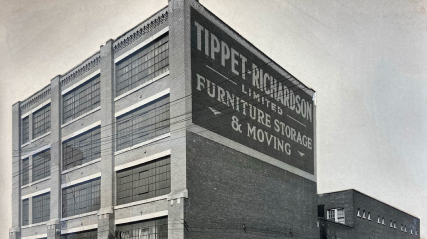
At Tippet Richardson, our international residential moving services are most useful when the plan reflects the full situation rather than just the collection date. A clear inventory, known access conditions, and an honest discussion about timing create a more reliable starting point.
How Much Does Moving to Budapest Cost?
The cost of moving to Budapest depends on more than the distance between two addresses.
Shipment volume, packing requirements, access at both properties, transport arrangements, storage, season, documentation, and the type of belongings all influence the final estimate. A general online figure is unlikely to reflect your actual circumstances.
Understand the Main Cost Categories
Your budget may include professional packing, collection from your Canadian home, transport, handling at transfer points, delivery in Hungary, unpacking if selected, storage, valuation or protection options, and charges associated with particular access or handling requirements.
Some expenses may be influenced by authorities or third parties and should be confirmed for your situation. Before moving to Budapest, record expenses that may change with your circumstances.
Housing and arrival costs should be budgeted separately. These can include temporary accommodation, a rental deposit, utility connections, local transport, furnishings, school-related expenses, and professional advice where required. Separating moving costs from settling-in costs makes it easier to compare quotes accurately.
A useful comparison is not simply the lowest total. Examine what each estimate includes, what remains your responsibility, whether packing is professional or self-completed, how fragile items are treated, how changes are handled, and what assumptions have been made about stairs, lifts, parking, and delivery access.
When moving to Budapest, compare what each estimate actually covers.
Why a Home Survey or Detailed Assessment Matters
A proper assessment helps identify the real work involved. A lift may be available at the origin but not at the destination.
A narrow stairwell, restricted parking, long carry, courtyard access, or limited delivery hours can affect how the move is planned. Large furniture may need careful measurement before it is approved for shipment.
Photographs, video calls, floor plans, and an in-person survey can all help, depending on the circumstances. Be especially clear about pianos, artwork, antiques, safes, glass, marble, large wardrobes, exercise equipment, and electronics.
When moving to Budapest, check room dimensions and daily routines before selecting furniture. These items should not be treated as ordinary cartons.
If your move includes a vehicle, plants, food, alcohol, medicines, weapons, or other regulated or restricted items, ask for specific guidance before including them.
Import rules vary by item and situation, and a moving company should not promise that an item will be accepted without checking the applicable requirements.
Reducing Cost Without Creating New Problems
The safest savings usually come from reducing volume early, not from cutting essential preparation. Cost planning for moving to Budapest works best with a detailed household inventory.
Selling or donating items locally can reduce transport and handling, while a realistic packing plan can prevent last-minute work. However, self-packing is not automatically cheaper once time, materials, damage risk, and responsibility for packed cartons are considered.
Avoid making decisions based only on a headline price. A low estimate that excludes packing, delivery conditions, storage, or special handling may become less attractive when the missing work is added.
Request a written explanation of assumptions and ask which parts of the estimate could change. For households moving to Budapest, a clear budget makes trade-offs easier.
Where Should Expats Live in Budapest?
The best neighbourhood to live in Budapest depends on your daily routine, housing preferences, budget, school or workplace location, and tolerance for central activity. Budapest is not one uniform market.
Two flats with similar rents can offer very different experiences because of building condition, noise, access to green space, transport, and the quality of the immediate street. For people moving to Budapest, the destination property’s details shape important decisions.
Central Districts and Inner-City Living
Central areas can appeal to people who want restaurants, cultural venues, shops, historic streets, and convenient public transport nearby. They may suit professionals without a car, couples who prefer an active environment, and newcomers who want to explore the city on foot.
The trade-offs can include busy streets, tourist activity, smaller flats, older buildings, courtyard-facing rooms with limited light, and more complicated parking. For Canadians moving to Budapest, local housing conditions deserve early attention.
Before signing a lease, visit at different times of day if possible. A quiet viewing in the afternoon may not reveal evening noise or early-morning collection activity.
Buda, Pest, and Residential Areas
Buda is often associated with hills, greener settings, and a more residential atmosphere, although the experience varies considerably from one area to another.
Pest includes many central and well-connected districts, as well as quieter residential sections farther from the busiest streets. If you are moving to Budapest, compare neighbourhood convenience with property access.
Families may prioritise parks, schools, larger floor plans, lift access, and a manageable commute. Others may prefer a central flat close to work and accept less space. If you are bringing furniture from Canada, measure doors, staircases, lifts, and room dimensions before assuming a property will accommodate everything.
What to Check Before Choosing a Home
Look beyond the advertised rent. Confirm the lease terms, deposit, utility arrangements, furnished or unfurnished condition, heating, air conditioning, internet availability, storage space, pet rules, and the process for reporting repairs.
Your destination home should guide what you keep when moving to Budapest. If the lease is not in a language you fully understand, obtain appropriate advice before signing.
For an international move, the delivery address should be treated as part of the moving plan.
Ask whether a moving vehicle can access the street, whether parking or building permission is needed, whether there is a lift, and whether the building has restrictions on moving hours. In dense urban areas, these details can matter as much as the distance from the border.
Newcomers often choose temporary accommodation first and search for a long-term home after learning the city. Planning for moving to Budapest starts with a realistic picture of your new home.
This can cost more initially, but it may prevent a rushed lease decision and give you time to understand commuting patterns and neighbourhood character.
Preparing Your Household Goods for an International Move
The physical preparation of your belongings is where a household move becomes a detailed operational project. Good preparation reduces confusion, protects fragile items, and helps you recognise missing or damaged belongings quickly after delivery.
It also gives you a better basis for deciding what should travel with you and what should not. For families moving to Budapest, a detailed inventory clarifies what needs special care.
Create a Practical Inventory
Use a room-by-room inventory with descriptions that are meaningful to you. “Box 12” is less useful than “kitchen baking equipment” or “bookshelf contents”. For valuable or fragile items, record photographs, identifying marks, approximate replacement values, and existing condition.
Keep essential documents, medication, jewellery, cash, passports, personal electronics, and irreplaceable items with you unless you have received specific professional advice. Do not place everything important in the shipment simply because it is being packed professionally.
The shipment may not be immediately available when you arrive. If you are moving to Budapest, identify fragile items before packing begins.
A simple priority system can help:
- Arrival essentials: clothing, toiletries, work materials, school items, basic kitchen supplies, and familiar belongings needed in the first weeks.
- Later-use items: seasonal clothing, books, decorative pieces, and furniture that can wait for delivery.
- Review items: belongings that are expensive to transport, difficult to replace, restricted, fragile, or not suited to your new home.
Prepare for Packing and Collection Day
Before the packers arrive, separate items that are travelling with you from items that are being shipped. People moving to Budapest should separate essentials from belongings arriving later.
Clear access routes, identify fragile or high-value pieces, and point out anything with existing damage. If you have children or pets, arrange a safe space away from the work area.
Do not assume that a professional packing service means every decision is removed from your responsibility. You still need to identify exclusions, confirm what is being packed, and retain documents and valuables that should not enter the shipment.
Ask how packed cartons are labelled and how the inventory will be checked. When moving to Budapest, assess furniture against your new home’s layout.
Furniture should be assessed for dismantling, wrapping, and reassembly. Some pieces are more vulnerable when taken apart repeatedly, while others cannot pass safely through a doorway without dismantling. The right choice depends on construction, access, dimensions, and the condition of the item.
Consider Storage and Delivery Timing
Storage Services can be useful when your Budapest accommodation is delayed, smaller than expected, or not yet selected. It can also help if household members arrive at different times.
However, storage adds handling and may delay access to items, so it should be used deliberately rather than as an automatic fallback. Keep a clear inventory of items stored while moving to Budapest.
Ask how your goods will be recorded, whether access is possible during storage, how the delivery will be arranged afterwards, and which charges are included in the estimate. The answers may depend on the service selected and the facilities involved, so obtain them in writing.
International household shipments can require coordination across several stages. Tippet Richardson can help clients plan residential moving services, packing, storage, and the handling of special belongings according to the details of the move.
The appropriate service should be confirmed after reviewing your inventory, origin, destination, timing, and access conditions. For house moving services to Budapest, storage can provide flexibility when dates differ.
Settling Into Life in Budapest as an Expat
Arriving with your belongings is only one part of relocating to Budapest. The first weeks are usually easier when you plan for practical administration, communication, transport, healthcare, schooling, and the emotional adjustment that comes with living somewhere new.
Manage Your First Weeks Carefully
Keep an arrival folder containing identity documents, accommodation information, employment or study records, insurance details, emergency contacts, and copies of your moving inventory.
Store it securely and make sure at least one trusted person knows how to access essential information if needed. When moving to Budapest, keep immediate essentials separate from packed belongings.
Your first priorities will depend on your circumstances, but many newcomers begin by confirming their accommodation, local registration or residence obligations, banking arrangements, mobile service, transport options, and access to healthcare.
Requirements and procedures can change, so verify them with current Hungarian authorities, your employer, school, insurer, or qualified adviser.
Learn the practical layout around your home. Identify a nearby supermarket, pharmacy, medical provider, transport stop, parcel collection point, and place to obtain household essentials.
This may seem minor, but familiarity with the immediate area makes the first month feel more manageable. For Canadians moving to Budapest, a first-week plan can ease the transition.
Plan for Language and Cultural Adjustment
English is widely used in many professional and visitor settings, but it should not be assumed everywhere. Learning basic Hungarian phrases can make everyday interactions easier and shows respect for the community. Keep translated or bilingual copies of important documents where appropriate, while retaining the original versions.
Cultural adjustment is not a sign that the move is going badly. New routines, unfamiliar administration, different shop hours, and changes in social habits can be tiring even when the relocation was your choice.
Joining local groups, expat communities, professional networks, sports clubs, or language classes can provide useful support without limiting you to an international circle. For Canadians moving to Budapest, familiar daily routines may take time to rebuild.
Think About Long-Term Comfort
Your first accommodation does not need to be your permanent answer. After several weeks, you may have a clearer view of commuting time, noise, winter heating, access to green space, and whether the home suits your furniture and routines.
That knowledge can inform a later move within the city if necessary.
If your shipment arrives after you, inspect cartons and major items methodically. Compare them with the inventory, record concerns promptly, and follow the agreed reporting process. Keep packaging or documentation until you understand whether it may be needed for a claim or follow-up.
Moving to Budapest is a major personal decision, but it does not have to be an improvised one. The combination of careful preparation, realistic expectations, and appropriate professional support can make the transition considerably easier.
The Canadian moving services market was valued at USD 9.06 billion in 2024 and is projected to reach USD 14.08 billion by 2033, expanding at a compound annual growth rate (CAGR) of 5.05% during the forecast period.
Wrapping Up
Moving to Budapest is best approached as a connected plan covering immigration, housing, budget, household goods, transport, storage, and the first weeks after arrival. Start by confirming your permission to enter or remain, choosing a realistic delivery address, and deciding which belongings genuinely belong in your new home.
Compare moving estimates by scope rather than price alone. A thorough inventory, clear access information, suitable packing, and a written understanding of timing can reduce surprises. For fragile, valuable, or unusually large items, early discussion is especially important.
Tippet Richardson has supported moving families for nearly a century, including residential moves that cross international borders. If you are planning a move from Canada to Budapest, our team can help you assess your household goods and discuss international moving services suited to your circumstances.
Moving to Budapest with a clear plan gives you more control over both the journey and the life you are preparing to build there.