

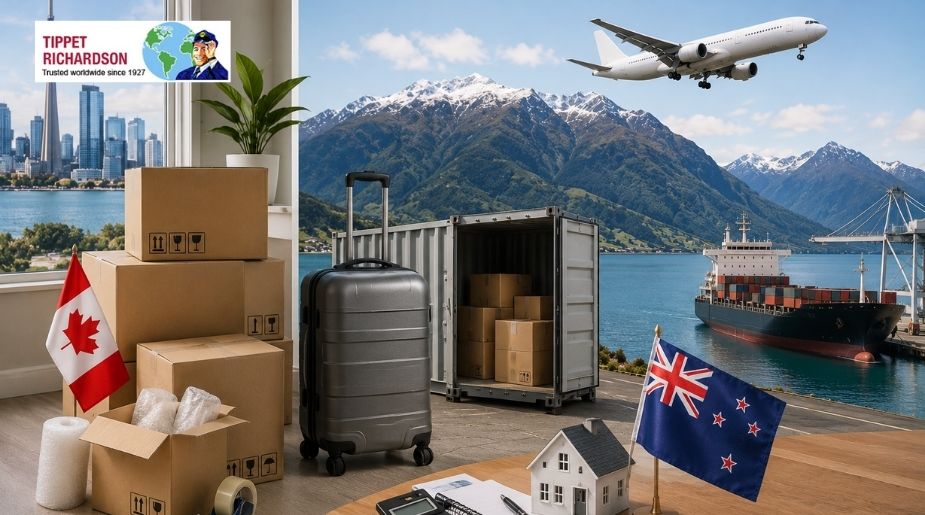
Moving internationally from Canada to New Zealand involves many cost variables that affect your overall budget. Your shipping method, the volume of belongings, and timing are key factors that shape your moving expenses. Understanding these early on helps prevent unexpected surprises as you plan this major life change.
At Tippet Richardson in Toronto, we have nearly 100 years of experience guiding clients through complex international moves. Our expertise covers everything from packing and storage to customs documentation and destination services. We’ll break down those costs and choices so you can make informed decisions, reducing stress and ensuring your move goes as smoothly as possible.
Understanding the Cost to Move from Canada to New Zealand: What Influences Your Expenses?
Figuring out the cost to move from Canada to New Zealand means breaking down several moving variables. Knowing these factors early helps you budget accurately and avoid unforeseen expenses. From our long experience at Tippet Richardson in Toronto, we’ve seen how each element—volume, shipping method, location, customs, and timing—affects your overall bill.
Volume and Weight of Belongings
The size and weight of your shipment are among the biggest cost drivers. Larger shipments require more space, which increases charges. International moves typically use two options: Full Container Load (FCL) and Less than Container Load (LCL).
– FCL means you rent a dedicated shipping container—usually 20 or 40 feet. This option is best for large shipments, providing maximum control and security.
– LCL groupage shares container space with other shipments. It suits smaller volumes but may take longer due to consolidation and deconsolidation processes.
For sea freight, a rough volume threshold for choosing FCL is about 15 cubic metres or more. Below that, LCL can be more cost-efficient. Air freight, though faster, has stricter volume and weight limits and quickly becomes expensive beyond small shipments.
Choice of Shipping Method: Sea Freight vs Air Freight
Choosing between sea freight and air freight is a key decision impacting your moving cost.
– Sea freight cost from Canada to New Zealand generally ranges lower per cubic metre, making it ideal for less urgent, bulk shipments. Transit time from Vancouver to Auckland typically runs 6 to 9 weeks.
– Air freight can reduce transit time to less than two weeks but is substantially more expensive. It suits customers with urgent timelines or smaller shipment volumes.
Each method comes with advantages and trade-offs. Sea freight offers cost savings and better rates on larger cargo, while air freight provides unmatched speed and flexibility. Tippet Richardson advises clients case-by-case, balancing budget, timing, and shipment size to find the ideal solution.
Origin and Destination Factors
Where your move starts and ends also affects your costs.
– Departing from a major port like Vancouver often offers more competitive rates and sailing schedules than Toronto, which requires additional land transport to the coast.
– Similarly, the accessibility of your New Zealand destination impacts delivery fees. Some locations may require transfer from major ports via truck or other transport, adding to the total charge.
Understanding these regional nuances helps you plan contingencies and factor in extra expenses beyond the base shipping rate.
Customs, Duties, and Documentation Costs
International moves inherently involve customs clearance and related paperwork.
– Proper documentation is crucial: detailed inventories, passports, visas, and import permits might be required depending on what you ship.
– Customs duties and taxes vary depending on item categories and New Zealand’s import regulations.
– Tippet Richardson’s team guides customers through documentation preparation and coordinates closely with customs agencies to prevent delays and unexpected costs.
This proactive support is part of our full-service approach, easing the burden on our Toronto clients.
Timing and Flexibility
When you book your move and your flexibility can influence the overall price.
– Early bookings often secure better rates and preferred sailing windows.
– Moving during peak seasons or holidays can increase the moving container cost Canada to NZ, as demand spikes.
– Flexibility in scheduling can allow Tippet Richardson to find cost-effective routing options for your shipment.
Being aware of seasonal patterns and booking well ahead pays off in both cost savings and smoother transit.
—
With a deep understanding of these factors, you can better evaluate your moving options from Canada to New Zealand. The next section will provide a detailed cost comparison table illustrating price ranges, transit times, and volume thresholds for sea freight and air freight. This will give you a clearer picture of what your international move might cost.
,500–2,000 CAD: Detailed Cost Breakdown Table for Moving from Canada to New Zealand
Understanding the typical costs involved can make planning your international move much easier. Below, we offer a detailed comparison of sea freight and air freight options based on our extensive experience with Canadian clients relocating overseas through Tippet Richardson.
| Shipping Method | Price Range (CAD) | Transit Time | Volume Threshold / Notes |
|---|---|---|---|
| Sea Freight (FCL) | 2,000 – 2,000 | Approximately 6–9 weeks (Vancouver to Auckland) | Full container (~20ft or 40ft), ideal for large-volume moves |
| Sea Freight (LCL Groupage) | ,500 – ,500 | Approximately 6–9 weeks (Vancouver to Auckland) | Shared container space, best for smaller shipments |
| Air Freight | 5,000 – 2,000 | 5–10 days | Suitable for urgent shipments or limited-volume moves |
These ranges reflect the real-world costs our Toronto-based team sees, acknowledging that your unique situation may vary. For example, moves originating closer to the West Coast often benefit from lower transit fares and quicker access to major shipping ports. Conversely, heavier or bulkier household goods push prices upwards, especially if air freight is preferred.
What stands out here is the significant price difference between sea freight LCL and air freight. While sea freight offers budget-friendly rates for larger shipments or non-urgent moves, air freight delivers speed at a premium cost. This distinction is vital when weighing your options for the canada to new zealand moving cost.
At Tippet Richardson, we help clients evaluate these choices by considering shipment size, timing, and personal priorities. Our expertise ensures you don’t just get a quote—you get a tailored plan that fits your needs and budget.
Ready to understand your specific costs? Request a free, no-obligation international moving quote from Canada to New Zealand through our Toronto office. Our team will provide a detailed estimate, factoring in your household volume, preferred shipping method, and timeline to help you make the best move possible.
Read also: New Zealand Visa Guide for Canadians: How to Move There Permanently or Temporarily
What Are the Typical Costs to Ship Belongings to New Zealand from Canada? A Practical Guide
When budgeting your move, the cost to ship belongings to New Zealand from Canada involves more than just freight charges. Several additional expenses contribute to the overall price, and understanding these helps you plan smartly.
Packing and Preparation Costs
Proper packing is critical for international moves. Fragile and valuable items require expert handling to withstand long transit and customs inspections. Professional packing also ensures your belongings comply with New Zealand’s strict import regulations.
Typical packing rates can vary depending on the inventory’s size and complexity. For example, wrapping fine art or disassembling furniture raises the cost. At Tippet Richardson, we provide customized packing services tailored to your shipment’s specific needs, helping you avoid damage and delays.
Insurance and Valuation Charges
International moves expose your belongings to more handling and travel risks. Insurance coverage protects you financially if damage or loss occurs en route.
You can choose from basic valuation plans included by some movers or opt for extended insurance that covers full replacement value. Pricing depends on the declared value and type of coverage. We advise clients in Toronto and beyond to carefully review insurance options and select protection that matches their risk tolerance.
Storage Costs If Needed
Sometimes, timing issues or destination readiness require temporary storage either in Canada or New Zealand. Storage fees are typically charged by volume and duration.
Short-term storage allows flexibility if your new home isn’t immediately move-in ready. Long-term storage may be necessary for extended transitions or phased relocations. Tippet Richardson offers secure, climate-controlled facilities with transparent pricing, assisting clients with tailored storage solutions.
Additional Services
Additional moving services can impact your budget. These include:
– Disassembling and reassembling bulky furniture or specialty items
– Handling fragile, high-value, or unusual possessions requiring special crates or packing materials
– Vehicle or pet relocation services if applicable
Discussing these details upfront with your mover helps avoid unexpected costs and ensures every aspect of your international move is covered.
Hidden or Unexpected Fees to Watch For
International moves can involve port fees, terminal handling charges, and quarantine inspections, especially when moving to New Zealand. These fees vary by port and shipment details.
Tippet Richardson’s experience helps clients anticipate and manage such expenses. By preparing thorough documentation and closely coordinating with customs, we aim to minimize delays and extra charges you might otherwise overlook.
—
By considering all these components—packing, insurance, storage, extra services, and potential fees—you gain a fuller picture of the overall cost to move from Canada to New Zealand. Our Toronto-based team is here to guide you through each step, helping you understand what to expect and plan accordingly.
How to Choose Between Air Freight and Sea Freight for Your Canada to New Zealand Move
Selecting the right shipping method is crucial for balancing your moving budget with your timetable and specific needs. Let’s explore when air freight or sea freight makes the most sense—and how Tippet Richardson’s experience guides you to the best choice.
Speed vs Cost: Finding Your Priorities
Sea freight is generally the more economical option for moving your belongings overseas. It’s especially cost-efficient for larger shipments. However, it requires a longer transit time—typically 6 to 9 weeks from Canada’s west coast to New Zealand.
On the other hand, air freight dramatically cuts transit time to around 5 to 10 days. The trade-off? Air freight comes with a much higher price tag. If you need key household items quickly or have a smaller volume to move, it might be worth the premium.
Deciding between speed and cost depends on your circumstances, such as the urgency of your move and your budget. We often help clients in Toronto weigh these factors carefully for their international relocation.
Volume and Weight Threshold Considerations
Another key consideration is the size and weight of your shipment.
Sea freight becomes cost-effective for shipments around 15 cubic metres or more, where sharing a full container (FCL) spreads delivery fees efficiently.
If your shipment is smaller, LCL or air freight may be more suitable, despite higher rates per unit volume. For air freight, weight limits and volume restrictions apply more strictly, so it suits smaller loads.
By understanding these thresholds, you avoid overspending on an unnecessarily expensive shipping method.
Reliability and Risk Factors
Transit reliability is an important factor. Weather delays, port congestion, and administrative holdups can affect shipping times at both sea and air.
Sea freight voyages face more exposure to these variables due to longer transit and multiple transfers. Air freight tends to be more predictable but still subject to weather and airport schedules.
At Tippet Richardson, our decades of international moving experience allow us to anticipate and mitigate these risks. We coordinate closely with shipping partners to keep your move on track and communicate clearly about any changes.
Environmental Impact and Personal Preferences
Beyond cost and timing, your environmental values might influence your decision.
Sea freight generally has a lower carbon footprint per cubic metre than air freight. For environmentally conscious movers, this could be a deciding factor.
We encourage clients to consider the full impact of their choice, balancing personal priorities with practical moving needs.
—
Choosing between air and sea freight isn’t just about numbers. It involves timing, shipment size, reliability, and your values. Leveraging the expertise of a trusted mover like Tippet Richardson in Toronto helps you navigate these trade-offs smartly, tailored perfectly to your unique situation.
How to Get an Accurate International Moving Quote from Canada to New Zealand
Getting a precise moving quote starts with understanding what information movers need and how they prepare their estimates. This clarity ensures fair pricing and avoids unexpected costs.
Information You’ll Need to Provide
To start, gather a detailed household inventory. Include key items, their approximate volume, and any fragile or valuable belongings. Movers also need your preferred moving dates and how flexible you are with timing. Lastly, information about your origin and destination addresses, including building access and parking, is essential. These details help frame the logistics and possible challenges for your move.
How Tippet Richardson Conducts Quote Assessments
At Tippet Richardson, our team offers both on-site surveys and virtual assessments. On-site surveys provide the most accurate understanding of your shipment size and special handling needs. Virtual surveys are a convenient alternative that still allows us to deliver reliable quotes.
A thorough assessment helps avoid hidden fees by identifying challenges like narrow stairways, multiple flights, or oversized items requiring special equipment. This attention to detail protects you from surprise costs on moving day.
Comparing Multiple Quotes: What to Look Out For
When you receive multiple international moving quotes, check that each includes key components: packing, transport, customs clearance, insurance, and any additional services. Watch for vague descriptions or unusually low prices, which may signal hidden fees or subpar service.
Be cautious if quotes don’t clarify delivery timelines or access limitations. Transparent movers like Tippet Richardson provide detailed, itemized quotes to help you compare offers confidently.
Preparing for the Final Move Budget
Even with a detailed quote, it’s wise to set aside contingency funds—often 10-15% of the estimated cost—to cover unexpected expenses. These might include last-minute packaging, customs delays, or storage needs.
To manage your budget effectively, plan early, communicate openly with your mover, and review all contract terms closely. Our Toronto team guides clients through this budgeting process, helping you stay on target financially and avoid last-minute stress.
—
Understanding the quoting process empowers you to make informed decisions about your international move from Canada to New Zealand. Partnering with an experienced mover like Tippet Richardson ensures your quote reflects your actual needs and supports a smooth relocation experience.
Common Challenges When Moving Overseas from Canada to New Zealand and How to Overcome Them
International moves are complex, and the journey from Canada to New Zealand comes with unique challenges. Drawing on decades of experience at Tippet Richardson in Toronto, here are common obstacles and practical ways to handle them.
Dealing with Transit Delays and Scheduling Uncertainties
Ocean freight transit times from Canada’s west coast to New Zealand often range from 6 to 9 weeks. Delays may arise from port congestion, weather, or logistical issues abroad.
To manage expectations, plan your move timeline with buffer weeks. Start the moving process early and stay in close touch with your moving coordinator. Flexibility is key—knowing which belongings you can send early versus what you need on arrival helps ease pressure.
Navigating Customs and Quarantine Rules in New Zealand
New Zealand has strict import requirements to protect its unique ecology. Customs inspections, phytosanitary certificates, and quarantine processes may apply, especially for plants, food items, and some household goods.
Experienced professionals like Tippet Richardson assist you with accurate documentation and prepare your shipment to meet all rules. Proper guidance prevents costly delays or penalties at customs, ensuring smoother clearance.
Protecting High-Value or Fragile Items
Fragile or valuable belongings demand extra packing care and handling. Long-distance shipments expose items to vibrations, stacking pressures, and environmental changes.
We recommend specialized packing materials, custom crates, and clearly labeling these items. Insurance coverage should reflect their value. Our team advises on packing techniques and the level of protection required, protecting your treasured possessions throughout transit.
Language and Cultural Considerations for a Smooth Arrival
Relocating to a new country involves more than just shipping goods—it includes adjusting to local culture and language. Understanding New Zealand customs helps ease your settlement.
Tippet Richardson supports clients with destination services, from arranging final delivery to recommending local contacts for utilities and services. This support turns a complex transition into a manageable step towards your new life.
How Tippet Richardson Supports Clients from Toronto for Seamless Long-Distance Moves
Our Toronto-based team prides itself on personalized service. We assess every client’s unique situation, offer tailored packing and moving plans, and handle cross-border regulations daily.
This hands-on approach gives you peace of mind—knowing your international move is planned with precision and backed by nearly a century of experience. From your first call to final delivery in New Zealand, Tippet Richardson is with you every step of the way.
Wrapping Up
Moving overseas from Canada to New Zealand involves many factors that influence your overall cost to move. With price ranges typically between ,500 and 2,000 CAD, understanding these variables upfront is essential.
Your moving container cost Canada to NZ depends on freight method, shipment volume, and scheduling. At Tippet Richardson, our Toronto-based team draws on nearly 100 years of experience guiding families and professionals through international relocations.
By accurately assessing your belongings’ volume, choosing the right shipping option, and securing a detailed international moving quote from Canada to New Zealand, you can manage your budget effectively and avoid surprises.
We’re here to support you throughout your move, from packing and customs paperwork to storage and delivery. Contact Tippet Richardson today to get your free moving quote and take the next step with trusted Canadian experts dedicated to making your overseas move as smooth as possible.