

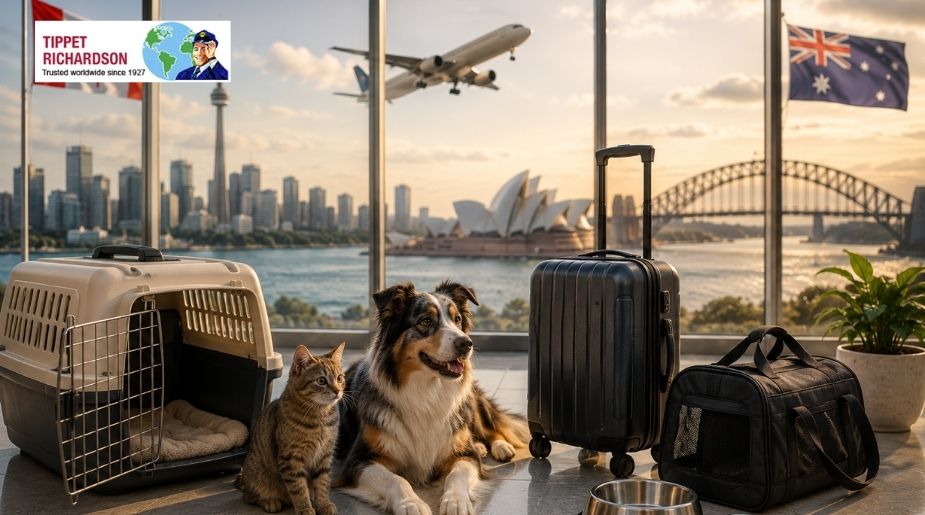
Moving pets from Canada to Australia is more involved than most expect. Australia’s biosecurity rules are among the strictest worldwide, designed to protect local wildlife and ecosystems.
If you’re planning this international move, understanding key requirements is critical. From permits and vet certificates to quarantine periods, each step matters. At Tippet Richardson, based in Toronto, we support families through international moves and help connect them with trusted experts for pet relocation Canada to Australia. This guidance ensures your entire move, including your furry family members, proceeds smoothly and safely.
In the following sections, we’ll dive into essential quarantine rules for pets arriving from Canada, how to bring pets to Australia from Canada with proper documentation, and why specialized pet relocators are invaluable partners. Knowing the details now can save you time and reduce stress when you finally reunite with your pets down under.
Understanding Australia’s Strict Quarantine Rules for Moving Pets from Canada to Australia
Moving from Canada to Australia means complying with one of the world’s toughest quarantine systems. Australia’s strict biosecurity laws exist to protect its unique environment from diseases and pests. Because of this, every pet arriving from Canada must go through an official quarantine process.
Typically, your dog or cat will spend at least 10 days at the Post Entry Quarantine Facility (PIQA) in Melbourne. This isn’t just a holding area—it’s a carefully managed, specialised environment where trained staff monitor your pet to ensure it is healthy and safe before release into Australia. Understanding why quarantine is necessary and what happens during those days helps you prepare and reduces worry.
The Role of the Post Entry Quarantine Facility (PIQA)
PIQA is Australia’s primary facility for incoming pets. Pets arriving from Canada will be taken directly there after their flight. The 10-day minimum quarantine period allows veterinary staff to observe your pet for any health issues, conduct tests, and provide necessary treatments.
PIQA provides spacious kennels designed to minimise stress, and animal welfare is a priority. Staff will feed and care for your pet, following strict protocols to meet Australia’s biosecurity standards. This process ensures that no contagious diseases enter the country, giving peace of mind to both pet owners and Australian authorities.
Approved Third Countries and Canada’s Status
Canada is classified as an approved third country by the Australian Department of Agriculture, Fisheries and Forestry (DAFF). This classification means Canada meets Australia’s high standards for pet health and disease control. However, pets from Canada still must meet all import requirements before and after arrival.
Being an approved third country does simplify some paperwork but doesn’t exempt pets from quarantine. The designation affects which tests and certificates your pet needs before travel, such as rabies vaccination and microchipping, but quarantine remains a firm part of the process.
Common Quarantine Myths Debunked
There are many misconceptions about quarantine. One common myth is that quarantine means neglect or poor conditions. In reality, facilities like PIQA maintain high standards of care and comfort.
Another myth is that quarantine duration can be shortened—these periods are legally mandated and based on science to ensure safety. Rushing or bypassing quarantine puts Australia’s ecosystem at risk and can lead to your pet’s return or worse.
Some believe pets are confined in cages continuously, but PIQA provides space and stimulation within secure enclosures. Understanding the facts helps you set realistic expectations and plan accordingly.
From our experience helping Toronto families move internationally, including pet relocation from Canada to Australia, we know full compliance with these quarantine and import rules avoids delays and additional stress. Partnering with specialists who know DAFF pet import requirements Canada in detail can guide you through this complex process smoothly. In the next section, we’ll walk through essential Canada to Australia pet import rules you must follow before your pet’s journey.
Essential Canada to Australia Pet Import Rules You Must Follow
Successfully moving pets from Canada to Australia starts with understanding and following the country’s exacting import rules. These regulations protect Australia’s delicate ecosystem, so strict compliance is non-negotiable.
At Tippet Richardson, we regularly assist Toronto families facing these complex requirements as part of our international moving services. Knowing the details upfront saves costly delays and protects your pet’s well-being.
Australia Pet Import Permit Canada Requirements
One critical step is obtaining the official Australia pet import permit. This permit is mandatory for all cats and dogs entering the country. Applying early is vital—typical processing can take several weeks.
You must submit your application to the Department of Agriculture, Fisheries and Forestry (DAFF) with detailed health information about your pet. Missing or incorrect paperwork can delay approval or jeopardize your pet’s entry. The permit confirms that your pet meets Australia’s high standards and is a prerequisite for travel.
Veterinary Health and Certification Requirements
Before departure, your pet must undergo comprehensive veterinary checks conducted by an authorized vet in Canada. These exams include vaccinations for rabies (even though Canada is rabies-free), internal and external parasite treatments, and blood tests such as rabies titre testing.
Proper documentation is essential: health certificates must follow DAFF’s format and timelines. This paperwork proves your pet’s good health and compliance with Australia’s biosecurity controls. Small errors or timing issues here are common reasons pets face quarantine extensions or denied entry.
Microchipping and Identification Standards
Australia requires pets to be microchipped with an ISO 11784/11785 compliant chip. This microchip ensures permanent identification and links directly to your pet’s health records.
Blood tests and certificate tracking depend on this ID number. If your pet’s microchip does not meet Australian standards, implantation of a compliant chip before any testing is necessary. This ensures a clear chain of identity throughout the import process.
Proof of Canada’s Rabies-Free Status and Its Impact
Canada’s official rabies-free status is an advantage but does not exempt pets from all rabies-related testing. Australia still mandates strict rabies vaccination, blood titer tests, and waiting periods to guarantee immunity and rule out exposure.
This status, however, influences how DAFF sets test timing and what quarantine measures apply. Knowing this nuance helps when arranging pre-departure vet visits and planning your pet’s travel schedule from Canada to Australia.
By carefully following these Canada to Australia pet import rules, you protect your pet’s health and make the crossing as smooth as possible. At Tippet Richardson, our Toronto-based international moving experts advise on timing and documentation, helping you connect with specialist pet relocation agents who handle these critical steps. Next, we’ll explore how to prepare your dog or cat for quarantine in Australia to ease that phase of your pet’s journey.
How to Prepare Your Dog or Cat for Quarantine in Australia
Proper preparation before your pet’s departure can make a significant difference in how smoothly quarantine goes. Planning ahead reduces stress for your furry friend and helps avoid last-minute surprises.
At Tippet Richardson in Toronto, we advise clients moving pets from Canada to Australia to focus on thorough pre-flight and quarantine readiness. Here’s what you need to know.
Pre-Departure Vet Checkups and Treatments
Start with a full vet examination to confirm your pet is fit to fly. Canadian veterinarians authorised by Australian authorities will conduct or certify:
- Rabies vaccination and blood tests, including rabies titration
- Treatments against internal parasites (worms) and external parasites (fleas, ticks)
- General health assessment to rule out contagious diseases
- Microchip insertion or verification if needed
All treatments must follow specific timing rules set by DAFF. For example, vaccinations have validity periods, and some tests must be performed weeks before travel. Careful scheduling is critical to meet these requirements without rushing.
Recommended Documentation and Packing Tips
Keeping your paperwork organised is just as important as medical preparation. Essential documents include your Australia pet import permit, veterinary health certificates, and blood test reports. Originals and copies should be securely stored and easily accessible.
When planning how to pack for a move, keep all pet travel documents, vaccination records, and import paperwork together in a clearly labelled folder within your carry-on luggage. This ensures important paperwork remains protected, organised, and easy to access throughout your relocation journey.
When packing your pet’s travel crate, choose one that meets International Air Transport Association (IATA) standards. The crate should:
- Be large enough for your pet to stand, turn, and lie down comfortably
- Include absorbent bedding and a leak-proof tray
- Have food and water containers attached for use during the flight and quarantine
- Be clearly labelled with your contact information and “Live Animal” stickers
Bringing a familiar blanket or toy can comfort your pet during travel and quarantine.
Flight Planning and Arrival Procedures
Flight logistics impact your pet’s quarantine experience considerably. Aim for direct or minimal-connection flights to reduce travel time. Melbourne, where PIQA is located, is the final destination airport for pet imports from Canada.
Coordinate the arrival with PIQA’s scheduling requirements to prevent delays. Early communication with pet relocation specialists can help you book flights that align with quarantine slot availability. This step ensures your pet enters quarantine promptly and starts the mandatory observation period without hold-ups.
Across hundreds of moves, Tippet Richardson has seen how detailed prep lessens the challenges of dog quarantine Australia Canada or cat import Australia from Canada. Working alongside specialised pet relocation agents familiar with DAFF pet import requirements Canada allows our clients to navigate this process confidently and compliantly. Next, we’ll discuss why partnering with these experts truly matters.
Why Partnering with Specialized Pet Relocation Experts Matters
Moving pets internationally is deeply complex and requires expert navigation well beyond what typical moving services offer. Each step must comply with detailed Canada to Australia pet import rules, or you risk costly delays and complications.
What Tippet Richardson Offers Within International Moving Services
At Tippet Richardson, based in Toronto, we provide comprehensive international moving support with a focus on your entire household’s smooth transition. For clients moving pets from Canada to Australia, our role centers on overall move planning, scheduling, documentation guidance, and coordination.
We work closely with your chosen pet relocation specialists, integrating timing and logistics with your broader household move. This partnership means your pet’s import paperwork, flight plans, and quarantine placements align seamlessly with your arrival, avoiding disconnects costly to fix.
The Role of Certified Pet Transport Companies and Handlers
Specialized pet transport companies handle the essential tasks of navigating Australia’s strict biosecurity rules. They manage everything from procuring your Australia pet import permit Canada, arranging vetted flights, to preparing your dog’s or cat’s travel crate to meet IATA standards.
These professionals also ensure all veterinary health certificates comply with DAFF pet import requirements Canada. Their expertise reduces risk of travel delays or quarantine complications. Without this knowledge, owners often face rejected entries or expensive holdovers in quarantine.
Ensuring Compliance and Pet Welfare Through Expert Coordination
Partnering with certified pet relocation agents maximizes your pet’s welfare throughout the move. Expert handlers guide you on best practices to prepare your pet emotionally and physically for quarantine, based on extensive experience with dog quarantine Australia Canada and cat import Australia from Canada cases.
Compliance management means avoiding mistakes like timing errors on rabies titres or improper microchipping. Tippet Richardson supports your move with practical timeline advice, helping you connect with these specialists early. Our combined service model creates a smooth, well-coordinated move that protects your pet’s health and reduces stress at every stage.
Every international pet move has risks, but working with knowledgeable partners reduces those to a minimum. At Tippet Richardson, we understand the importance of this and help Toronto families by connecting international moving services with trusted pet relocation professionals. This teamwork proves invaluable when navigating Australia’s complex quarantine and import framework. Up next, we’ll cover frequently asked questions about moving to Australia.
Wrapping Up
Moving pets from Canada to Australia demands careful planning and strict compliance with Australia’s biosecurity rules. Every document, vaccination, and quarantine step protects both your pet and Australia’s unique environment.
At Tippet Richardson, based in Toronto, we help families navigate these complex international moving services. Our team works closely with trusted pet relocation specialists to coordinate every detail, so your pets arrive safely and smoothly.
By understanding official import permits, vet requirements, and quarantine procedures ahead of time, you can reduce stress and avoid costly setbacks. Thoughtful preparation is the key to ensuring your furry family members settle quickly into their new Australian home.