

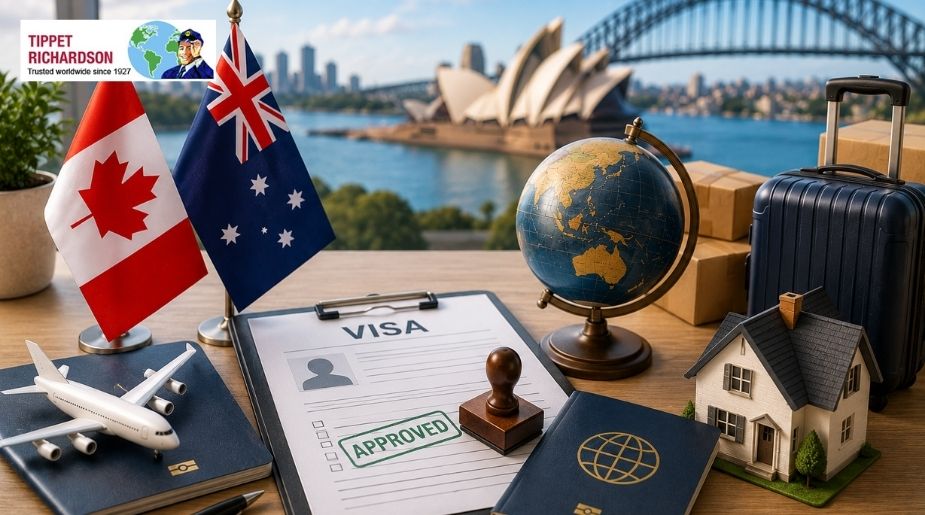
Moving internationally requires more than just packing up your belongings. For Canadians planning to move to Australia, understanding visa requirements is crucial to avoid costly delays or surprises. We’ve seen firsthand at Tippet Richardson in Toronto how visa uncertainties can disrupt even the most carefully planned international moves.
This Canada to Australia visa guide breaks down key visa types tailored to Canadians, including skilled, employer sponsored, working holiday, and partner categories. Knowing which visa fits your professional background and personal situation will streamline your immigration process and help align your moving timeline with Australia’s requirements. Let’s get into the details so you can move forward with confidence.
Exploring Top Visa Options for Moving from Canada to Australia
Choosing the right visa is foundational to a successful immigration journey. Each visa suits different personal and professional circumstances, especially for Canadians navigating Australia’s immigration system.
Skilled Independent Visa (Subclass 189)
The Skilled Independent visa is designed for highly skilled professionals who do not have employer sponsorship. It operates on a points-based system that evaluates factors like age, work experience, English proficiency, and education. Canadians with qualifications in in-demand occupations often qualify. Approval grants permanent residency, allowing you to live and work anywhere in Australia.
This visa suits those confident in their skills who prefer independence in relocating without a direct job offer or state nomination.
Skilled Nominated Visa (Subclass 190)
The Skilled Nominated visa requires a nomination from an Australian state or territory. It’s also points-tested but awards additional points for the nomination, improving chances for many applicants. Successful candidates receive permanent residency and must commit to living in the nominating region for at least two years.
Canadians whose occupations align with specific state shortages or who have ties to certain communities benefit most from this visa.
Employer Sponsored Visa (Temporary Skill Shortage – Subclass 482)
This visa is for skilled Canadians with an Australian employer willing to sponsor their stay. It provides a temporary work visa, typically valid from one to four years, with potential pathways to permanent residency. The sponsoring employer must demonstrate that no suitable local candidate is available.
If you have a job offer in hand, this visa might be the most direct route to relocating and working in Australia.
Working Holiday Visa (Subclass 417)
The Working Holiday visa allows Canadians aged 18 to 35 to stay in Australia for up to 12 months, combining travel and work. It’s ideal for young adults seeking short-term work opportunities with the freedom to explore the country. Holders may be eligible to extend their stay by completing specified work in regional areas.
While not a pathway to permanent residency, it’s a flexible option for testing life in Australia.
Partner Visa (Subclasses 820 and 801)
For Canadians married to or in a de facto relationship with an Australian citizen or permanent resident, the Partner visa offers a two-stage process. Initially, the applicant receives temporary residency (Subclass 820), which, after qualifying period and verification, converts to permanent residency (Subclass 801).
Documenting the genuineness of the relationship is critical here, with evidence including shared finances, cohabitation, and social recognition.
Comparison Table: Visa Type, Eligibility, Processing Time, and Cost
| Visa Type | Eligibility Criteria | Approx. Processing Time | Cost Range (AUD) |
|---|---|---|---|
| Skilled Independent | Points tested skills, no sponsorship | 8–12 months | ,115+ |
| Skilled Nominated | State nomination + points test | 7–11 months | ,115+ |
| Employer Sponsored | Job offer and sponsorship | 1–6 months | ,265+ |
| Working Holiday | Age 18-35, Canadian citizen | 1–3 months | 85 |
| Partner Visa | Genuine relationship | 12–24 months | ,715+ |
Keep in mind, visa processing times and fees vary based on application volume and government policies. You should confirm all details with official Australian immigration sources.
At Tippet Richardson, based in Toronto, we recognize that visa choice shapes the entire moving process. Aligning your visa type with your timeline helps us plan packing, customs handling, and international transport efficiently. Whether you’re moving for work, family, or adventure, understanding these visa categories is a crucial first step to a smooth relocation from Canada to Australia.
How to Immigrate to Australia from Canada: Practical Steps
Moving from Toronto or anywhere in Canada to Australia involves much more than picking a visa. It’s about careful preparation, timing, and managing each step thoroughly.
Preparing Your Visa Application
First, collect all necessary documentation. This includes proof of your skills, education, employment history, and identity. Australian immigration requires medical exams and police checks to confirm your health and character. Missing or incomplete documents cause delays, so accuracy and thoroughness matter.
We often advise clients moving internationally to start gathering paperwork well before submitting applications. Organising your documents early helps avoid last-minute issues and aligns your immigration timeline with your move.
When and How to Lodge Your Application
Australia’s Department of Home Affairs handles visa applications online. You’ll use their portal to submit your forms, upload documents, and pay fees. Timing your application can impact success; economic conditions, job markets, and application volumes fluctuate throughout the year.
For example, applying during peak migration seasons or when your occupation is in high demand might speed up processing. Conversely, delays can occur during busy periods or policy changes, so keep monitoring official updates.
Working with Migration Agents & Why It Matters
Navigating visa rules isn’t always straightforward. That’s why we recommend consulting MARA-registered migration agents. These professionals understand the detailed criteria for Australian visas and can guide you through complex applications.
We’ve seen how agents help clients avoid common mistakes, such as incomplete forms or missing eligibility requirements, which can lead to rejection or longer waits. Although Tippet Richardson doesn’t provide visa services, partnering with a qualified MARA agent can save you time and give peace of mind.
Planning Your Move with Tippet Richardson
Once your visa is approved or underway, coordinating your move is critical. At Tippet Richardson, we work closely with clients in Toronto to align moving dates with visa timelines. This reduces the risk of storage issues or delays at your destination.
Our services include careful packing tailored for international transport, handling customs paperwork, secure storage if your timing doesn’t align exactly, and expert vehicle or pet relocation. For cross-border moves like Canada to Australia, these details ensure your belongings arrive safely and on schedule.
Every step, from application preparation to the physical move, requires planning and expertise. With the right visa guidance and a trusted moving partner, your transition from Canada to Australia can be managed smoothly and confidently.
Which Visa Is Best for Moving to Australia from Canada? Comparing Your Options
Choosing the right visa depends on your unique circumstances. It’s about balancing eligibility, long-term goals, and practical factors before making a decision.
Factors Influencing the Best Visa Choice
Your age, occupation, and qualifications are key starting points. For example, younger applicants with in-demand skills may have advantages under skilled migration visas. Family situation matters too — those moving with partners or dependents might lean toward partner or family-sponsored visas. Lastly, consider whether you want permanent residency or a temporary stay, as this shapes your visa options profoundly.
Skilled Migration vs. Working Holiday: Pros and Cons
Skilled migration visas offer permanent residency but require meeting strict points-based criteria. They’re suited to professionals ready for a long-term relocation. The Working Holiday visa, however, targets younger Canadians seeking short-term work and travel flexibility. It doesn’t offer a direct path to residency but can be a great stepping stone.
Here’s what to keep in mind:
- Skilled migration demands evidence of qualifications and work experience.
- Working Holiday is simpler to obtain but time-limited and age-restricted.
- If career continuity and residency matter, skilled visas often work better.
Partner Visa and Family Reunification Considerations
For Canadians with Australian partners, the Partner visa provides a clear path from temporary to permanent residency. The application process demands detailed relationship evidence — shared finances, cohabitation proof, social recognition, and more. Be prepared for longer processing times but know this pathway is vital for family unification.
Employer Sponsorship Benefits and Limitations
If you have an Australian job offer, employer-sponsored visas can fast-track your move. These visas are generally temporary but may lead to permanent residency after meeting specific conditions. The limitation is clear: without sponsorship, this path isn’t available. Furthermore, employers must navigate regulatory requirements to sponsor you.
Real Case Examples of Canadian Applicants
Consider a Toronto IT professional who successfully applied for the Skilled Independent visa by highlighting his experience and English skills. Contrast this with a Canadian couple where one partner held a job offer, enabling the Employer Sponsored visa route, while also applying for a Partner visa for family reunification. Each scenario shows how personal circumstances shape visa choice.
At Tippet Richardson, we regularly assist families and professionals planning their move from Toronto. Understanding visa options ahead of time allows us to align moving logistics seamlessly, from packing schedules to storage solutions, ensuring the move complements immigration timelines.
Deciding on the best visa is undoubtedly complex. But arming yourself with information tailored to your situation helps turn uncertainty into a clear plan. Always consider professional migration advice alongside your moving preparations to make your Australia journey successful.
At Tippet Richardson, we understand that visa uncertainty can complicate your international move. While we do not provide visa services, our deep experience moving Canadians abroad has taught us that early visa planning paired with expert logistical support is the best way to ensure your move to Australia goes smoothly. For visa specifics, we recommend consulting a MARA-registered migration agent who specializes in australian visa options for Canadians.
For more insights on living in Australia, explore our detailed [City Guide](#) to prepare fully for your new home.
Read also: Moving to Australia from Canada: The Complete Relocation Guide
Planning Your Move from Toronto to Australia with Tippet Richardson
At Tippet Richardson, we understand that coordinating an international move alongside complex visa processes requires careful timing and expert support. Our experience with clients relocating from Toronto to Australia allows us to anticipate challenges and tailor solutions throughout your move.
Scheduling Your Move to Match Visa Timelines
Visa processing can be unpredictable. Because of this, we recommend scheduling your move with flexibility. Holding tentative moving dates until visa approval helps avoid costly storage or rescheduling issues. We work closely with you to adjust timing if your visa process takes longer or finishes earlier than expected, ensuring your belongings are moved when you’re ready.
Packing and Shipping Tips for Australia-Bound Households
Proper packing protects your items against the rigors of international transit and customs inspections. We use high-quality materials suited for long-distance shipping and advise on how to separate restricted items ahead of time. Fragile or valuable possessions receive special handling to minimize risks during shipment. Our crews also prepare detailed inventories to simplify customs clearance and your unpacking in Australia.
Managing Temporary Storage Needs
Sometimes visa or travel plans lead to timing mismatches. Our secure storage facilities in Toronto can house your belongings safely for short or extended periods. This service offers peace of mind if you need to delay your move without compromising your possessions’ condition or security.
Supporting Your New Beginning
Arriving in a new country brings many adjustments. We help by connecting you with trusted local contacts and resources in Australia—from utility services to community groups. Knowing what to expect upon arrival and where to find support helps smooth your transition into Australian life and eases initial settling in.
Read also: How Much Does It Cost to Move from Toronto to Australia?
Why Couples or Families Appreciate Our Experience
Moves involving partner or family visas often come with added complexity. Coordinating travel plans, documentation, and timing for multiple people is demanding. We’ve guided countless couples and families through these challenges, offering personalized moving plans that respect relationship visa timelines and family needs — ensuring everyone arrives together and belongings follow without hassle.
At Tippet Richardson, our role is to manage the physical move while respecting your immigration schedule. With almost a century of experience based in Toronto, we combine practical expertise and personalized care to support your international relocation to Australia. When paired with proper visa planning, this ensures your move is as smooth as possible from start to finish.
Wrapping Up
Moving from Canada to Australia requires a clear understanding of visa options, eligibility, and syncing your moving plans with immigration timelines. At Tippet Richardson in Toronto, we’ve seen how clarity around visas makes the entire relocation process less stressful and more manageable.
Whether you’re aiming for permanent residency through skilled visas, exploring the working holiday route, or joining a partner, this Canada to Australia Visa Guide helps you ask informed questions and prepare effectively. While we do not provide visa services, consulting a MARA-registered migration professional is essential to navigate the complexities confidently.
When the time comes, our seasoned team at Tippet Richardson is ready to handle the moving logistics with precision and care. With nearly a century of experience, we support you every step of the way—from packing to customs and delivery—making your move from Toronto to Australia as smooth as possible.