

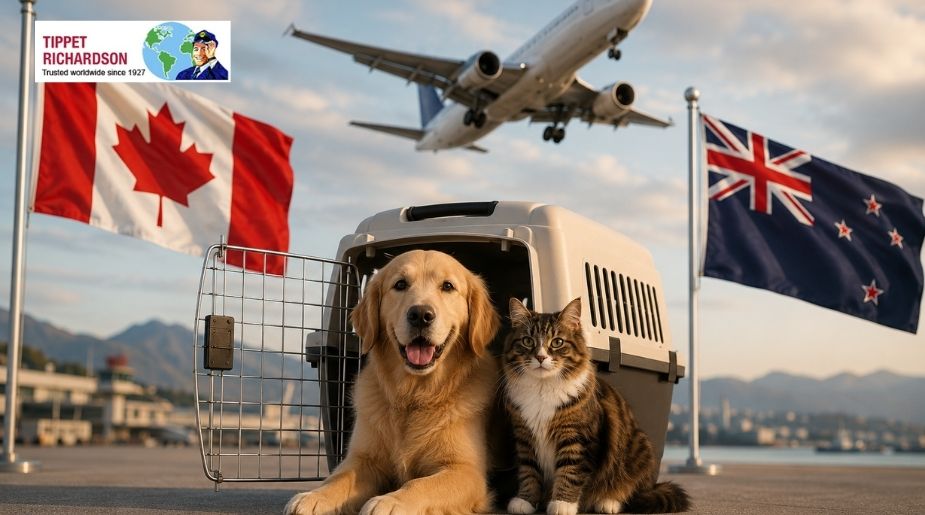
Moving pets from Canada to New Zealand requires careful planning due to some of the world’s strictest biosecurity rules. New Zealand’s Ministry for Primary Industries (MPI) enforces detailed import regulations and a mandatory 10-day quarantine to protect native wildlife. These steps mean pet owners must be well-informed before starting the process.
At Tippet Richardson in Toronto, we’ve guided many clients through international moves that include pet relocation. While specialized pet relocation agents handle the detailed logistics, we help you understand the essential requirements, costs, and timing. Knowing these upfront helps reduce surprises and ensures your pet’s journey is safe and meets all Canadian and New Zealand regulations.
Comprehensive Guide to Moving Pets from Canada to New Zealand
Moving pets from Canada to New Zealand is far more complex than simply booking a flight. New Zealand’s unique environment requires strict controls to prevent disease and protect native species. This means pet owners must navigate a rigorous process involving health certifications, microchipping, and a mandatory quarantine period upon arrival.
Overview of New Zealand MPI Pet Import Canada Requirements
The Ministry for Primary Industries (MPI) oversees all pet imports into New Zealand, enforcing strict rules to maintain biosecurity. Before your pet can enter the country, you must secure a valid import permit from MPI. This official document confirms your pet meets New Zealand’s health and safety standards.
In addition to the permit, you’ll need a comprehensive set of veterinary documents. These include:
- Official veterinary health certificates confirming your pet’s condition
- Proof of microchipping for permanent identification
- Rabies titre test results showing adequate immunity
These documents must comply with MPI’s detailed guidelines to avoid delays or refusals at the border.
Accepted Pet Species and Transit Rules
New Zealand permits the import of several pet species, but dogs and cats are the most common. However, the journey isn’t always direct. Due to New Zealand’s stringent regulations, some pets traveling from Canada must transit through Australia or other MPI-approved third countries.
Why is this necessary? Australia acts as an approved interim quarantine and inspection point for certain cases, ensuring pets meet destination requirements before final entry. This secondary requirement can impact scheduling and costs, so planning for these transit stops is crucial.
Essential Pet Vaccinations and Health Preparations
Rabies vaccination is a key focus since New Zealand is rabies-free. Your pet must receive an approved rabies vaccine well before travel. Following vaccination, a rabies titre blood test is required to confirm your pet’s immune response—this step ensures the vaccination was effective.
MPI also mandates parasite treatments, including tick and worm medications, to prevent introducing pests. Other vaccinations may be necessary depending on your pet’s health history and travel timing.
Microchipping is non-negotiable as it permanently links your pet to its medical records and owner. The microchip must be ISO-compliant to be recognized by New Zealand authorities.
Pet Quarantine Requirements in New Zealand
A non-negotiable part of moving to New Zealand is the mandatory 10-day quarantine period at MPI-approved facilities. This quarantine protects both your pet and New Zealand’s environment by monitoring for any diseases or pests.
During quarantine, pets receive daily care, including feeding, exercise, and medical attention if needed. Owners can expect to communicate with facility staff but typically cannot visit their pets in person due to biosecurity risks.
For dog owners relocating from Canada, be aware that additional behavioural assessments might be conducted during quarantine to ensure the safety of others.
Role of Professional Pet Relocation Services
Managing this multi-step process alone can be daunting. Pet relocation specialists coordinate vet visits, health testing, paperwork, approved transportation routes, and quarantine bookings. Their expertise mitigates risks of errors that could result in denied entry or extended quarantine.
At Tippet Richardson, we understand how critical this coordination is. While we handle comprehensive international moving services from Toronto, we work alongside pet relocation experts to support clients moving with animals. Our role includes advising on timelines, integrating pet needs into your broader move, and facilitating smooth transitions at origin and destination.
Engaging specialists early is especially important given the strict compliance landscape with NZ MPI pet import Canada rules. This teamwork ensures your pet’s relocation adheres to current regulations and arrives safely.
This guide lays the groundwork. Next, we’ll explore detailed step-by-step preparation to navigate these requirements confidently and make your pet’s journey as smooth as possible.
How to Bring Pets to New Zealand from Canada: Step-by-Step Preparation
Moving pets internationally demands detailed planning, especially when moving pets from Canada to New Zealand. Starting early helps reduce stress and avoids costly delays common in this tightly controlled process.
Early Planning and MPI Consultation
First, confirm the latest MPI pet import rules. These regulations can update frequently, so consulting MPI’s official resources or a specialist well in advance is vital.
We recommend beginning preparations at least 6 to 9 months before your scheduled move. This timeline allows sufficient windows for vaccinations, blood tests, permit applications, and logistical arrangements. Early planning also gives you time to coordinate with moving service providers like Tippet Richardson, who can advise on integrating pet relocation within your overall move from Toronto.
Veterinary Visits and Documentation Process
Selecting a veterinarian accredited by MPI in Canada is crucial. An accredited vet understands the exact health examinations and certifications required by New Zealand authorities.
Your pet will undergo a rabies titre blood test to confirm immunity, alongside other vaccinations and parasite treatments mandated by MPI. Accurate, detailed immunization records and health certificates must be prepared according to MPI guidelines.
Apply for the official import permit early. This document is mandatory and confirms MPI’s approval of your pet’s entry. Delays in paperwork can push back your entire moving schedule, so keeping everything in order before departure is essential.
Crate Training and Travel Readiness
Choosing the right travel crate is more than a formality. It must meet international airline standards to ensure safety and comfort during transit.
Start acclimatising your pet to its crate weeks ahead of departure. This reduces stress and helps your pet see the crate as a familiar space. Many pet owners find routine crate time at home greatly benefits animals on long flights.
Transit and Flying Tips from Canada to New Zealand
Because some pets must transit through Australia or other approved countries, coordinating authorized travel routes is imperative. This step ensures compliance with MPI’s third-country transit requirements.
Book flights well ahead, selecting pet-friendly airlines that specialize in live animal transport. Knowing airline policies on feeding, hydration, and pet handling safeguards your pet’s wellbeing on travel day.
Prepare for flight day by limiting food intake to prevent discomfort and ensuring your pet stays hydrated. Keep routine and reassurance to help ease anxiety.
Arrival and Quarantine Procedures
Upon arrival in New Zealand, your pet will be transferred to an MPI-approved quarantine facility for a strict 10-day observation period.
During quarantine, MPI staff will provide daily care, and your pet’s health will be closely monitored. Owners typically receive updates but cannot physically interact with their pets due to biosecurity rules.
Understanding the quarantine experience helps you mentally prepare for this part of the journey. Planning visits or communications with the facility, where allowed, can ease separation anxiety.
Tippet Richardson’s experience with international relocating from Toronto means we understand how integrating pet relocation steps early in your move plan can save time and reduce stress. While specialist pet relocation agents manage the complex logistics, we’re here to bridge planning gaps and support your overall international move seamlessly.
Next, we will break down the costs involved in bringing your pet from Canada to New Zealand, helping you budget wisely for this important part of your relocation.
Understanding Costs of Bringing Pets to New Zealand from Canada
Moving pets from Canada to New Zealand involves several significant expenses. Knowing where your money goes helps you budget realistically and plan accordingly. Here’s a detailed breakdown based on common scenarios we’ve managed at Tippet Richardson, Toronto.
MPI Import Permit and Quarantine Fees
First up: the MPI import permit. This government fee covers the official approval process. While the permit cost is relatively fixed, it’s mandatory, so budget for it from the start.
Next comes quarantine. Every pet must spend 10 days in an MPI-approved facility upon arrival. Quarantine fees vary by facility but generally include daily care, health monitoring, and lodging. These fees differ for cats and dogs and are charged either daily or as a fixed package. Delays in paperwork or health clearances can extend quarantine, increasing costs.
Transportation and Veterinary Expenses
Before travel, your pet needs veterinary work aligned with Canada to NZ pet import rules. Testing for rabies antibodies (titre test), vaccinations, parasite treatments, and health certificates add up quickly. Vet costs can vary but expect this step to be a noticeable portion of your budget.
Air transportation is another big ticket. Live animal cargo handling requires specialised staff and equipment. Plus, your pet’s travel crate must meet airline and international safety standards, which can be costly. Airfares depend on flight route, carrier, and the need for approved transit stops (often Australia).
Read Also: How to Pack for a Move from Canada to New Zealand: What to Bring (and What to Leave)
Additional Expenses to Anticipate
Beyond basics, many owners opt for pet relocation specialists who handle complex permits, health requirements, and logistics. Their fees vary but reduce risk and save time.
Ground transport to and from airports or quarantine facilities also adds cost, especially for those living outside major hubs like Toronto.
Insurance for your pet’s health during transit and quarantine is another wise investment for peace of mind.
Finally, unforeseen delays—such as missed test deadlines or quarantine extensions—may inflate costs unexpectedly.
Cost-saving Tips and Planning Advice
Booking early can ease financial pressure by locking in rates for flights and quarantine.
Combining your international move with services from established companies like Tippet Richardson often offers packaged savings, bundling your pet relocation with household goods shipment.
Most importantly, work with experienced agents on both ends. Their knowledge avoids costly mistakes, compliance problems, and delays that quickly multiply costs.
Having a clear cost overview empowers your move planning. At Tippet Richardson, we guide Toronto clients through these realities, helping integrate pet relocation seamlessly into your journey from Canada to New Zealand. Next, we’ll address some common questions to clarify the process further.
Wrapping Up
Relocating your pet from Canada to New Zealand demands strict adherence to MPI’s comprehensive import rules and quarantine requirements. From our experience at Tippet Richardson in Toronto, early planning and thorough preparation are the keys to easing many challenges pet owners face.
By familiarizing yourself with necessary permits, approved transit routes, vaccination protocols, and the mandatory 10-day quarantine, you can make well-informed decisions that protect your pet’s health and ensure regulatory compliance.
We recommend partnering with trusted professional movers and specialist pet relocation agents early in your journey. This collaboration helps create a smooth, stress-reduced transition for both you and your furry family members as you embark on your new life in New Zealand.