

- A detailed packing checklist separates essential documents, daily necessities, fragile items, and goods requiring customs review.
- International moving to Rome requires accurate inventories, clear descriptions, and careful preparation for customs clearance.
- Toronto condo access, elevator bookings, parking, and building rules should be confirmed before packing begins.
- Moving to Rome apartments often means planning for smaller rooms, stair access, lift dimensions, and limited storage.
- A qualified international moving company can coordinate packing, transport, documentation, and delivery planning around your circumstances.
A packing checklist is the safest way to prepare for your first international move from Toronto to Rome, because it turns a complicated household move into a series of manageable decisions.
You need to know what travels with you, what belongs in your shipment, what should stay behind, and which items may require additional documentation.
Moving abroad also involves more than putting belongings into boxes. Toronto building access, Italian apartment conditions, household inventories, customs clearance, shipping arrangements, and the timing of your arrival all affect the plan.
This guide explains how to organise your belongings, prepare the right paperwork, pack for Rome apartments, and decide when professional support from Tippet Richardson may be useful.
Building Your Packing Checklist for Moving to Rome
The most useful packing checklist is organised around decisions, not simply rooms. Before you buy cartons or wrap a single plate, establish what you are taking, why you are taking it, and when you will need it.
This approach prevents the common first-move mistake of packing everything and discovering later that some items are expensive, restricted, unsuitable for the new home, or needed before the shipment arrives.
Start with a Whole-Home Inventory
Walk through your Toronto home with a notebook or spreadsheet. Record each major item, its approximate value, its condition, and whether it is intended for the international shipment, accompanied baggage, storage, donation, sale, or disposal.
Grouping items by destination gives you a much clearer picture than packing room by room without a plan; add this to your packing checklist.
For valuable furniture, artwork, antiques, electronics, and speciality items, take photographs before packing. Capture identifying marks and existing wear. These records help you recognise items on arrival and provide useful information when discussing packing requirements or valuation with your moving company.
Do not wait until packing day to make difficult decisions. International transport takes more planning than a local move, and unnecessary belongings can add volume, handling, and cost.
At the same time, replacing a well-made item in Rome may be more difficult than expected, particularly if it has sentimental value or is designed for your household; add this to your packing checklist.
Create Four Practical Categories
A simple four-category system works well for most first international moves:
- Travel with you: passports, personal records, medication, valuables, chargers, a change of clothes, and items needed immediately after arrival.
- Ship to Rome: furniture, household goods, clothing, books, and other permitted belongings that fit your longer-term plan.
- Store or leave behind: seasonal items, property-related belongings, or things you may need later but do not want in the first shipment.
- Dispose of or give away: damaged, duplicated, restricted, or low-value goods that are not worth moving internationally.
Keep the first category physically separate from the shipment. A sealed document folder and a clearly identified arrival bag are more reliable than trying to remember which carton contains an important item; flag this on the packing checklist.
Request Advice Before Packing Unusual Items
Food, plants, seeds, soil, firearms, chemicals, aerosols, alcohol, certain medicines, batteries, and other controlled or regulated goods may raise questions. Requirements can vary by item and may change, so do not rely on a general online list.
Ask your moving company what information is needed, then verify any official requirements that apply to your circumstances.
A professional assessment is especially worthwhile when your shipment includes artwork, antiques, musical instruments, specialist equipment, or high-value belongings. The correct packing method may affect protection, handling, documentation, and whether the item is suitable for the planned service; include this in the packing checklist.
What Should You Pack for an International Move to Rome?
The right contents for an international moving services depend on your accommodation, length of stay, lifestyle, and access to local shops. Rome apartments can vary widely, from historic buildings with narrow stairs to modern residences with lifts and shared entrances.
Before deciding what furniture to bring, obtain as much information as possible about your destination home; flag this on the packing checklist.
Measure Before You Commit to Furniture
Ask for room dimensions, door widths, lift dimensions, stair details, and any restrictions on moving large items. If you have not yet secured an apartment, be conservative. Large Canadian furniture may not suit compact rooms, older buildings, or buildings where access is limited.
A piece that fits comfortably in a Toronto detached home may be difficult to position through an Italian entrance or internal staircase.
Measure sofas, wardrobes, bed frames, dining tables, and tall cabinets. Note whether they can be dismantled and whether specialist tools are required. Photograph unusual access points if possible.
These details help your international moving company assess the move more accurately and reduce unpleasant surprises at delivery; keep this on the packing checklist.
There is a practical trade-off between replacing furniture after arrival and shipping what you already own. Replacement costs, quality, sentimental value, and the size of your new home all matter. A measured, selective shipment is usually easier to manage than bringing every item simply because it already exists.
Pack an Arrival Kit
Your shipment may not be available on the same day you reach Rome. Keep an arrival kit with you rather than placing it in a moving carton.
Include several days of clothing, toiletries, essential medication, chargers and adapters, copies of important documents, basic kitchen items, and anything needed for children or pets; flag this on the packing checklist.
Keep digital copies of key records in a secure location, but retain original documents with you where they are needed. Do not put passports, birth certificates, property papers, financial records, prescriptions, or irreplaceable photographs into the main shipment.
Your first-night needs should be considered separately from your long-term household needs. Bedding, towels, a small amount of cookware, and basic cleaning supplies may be useful if your accommodation is unfurnished or only partly equipped.
Confirm what the apartment includes before deciding what to purchase or pack; keep this on the packing checklist.
Consider Climate, Electrical Items, and Everyday Use
Rome has hot summers and cooler, sometimes damp winters, so review your clothing for both seasons. Shoes and coats can take substantial space; select practical, versatile items rather than packing every option. Books should also be assessed carefully because they are heavy relative to their volume.
Canadian electrical items may not be suitable for use in Italy without checking voltage, frequency, plug type, and manufacturer guidance. An adapter changes the plug shape but does not necessarily make an appliance electrically compatible.
For expensive or high-powered equipment, confirm suitability before deciding to ship it; keep this on the packing checklist.
At around this stage, it can be useful to request a free moving quote based on an inventory or in-home assessment.
A clearer list helps Tippet Richardson discuss packing needs and the likely scope of your Toronto-to-Rome move without asking you to make decisions based only on guesswork; track this through the packing checklist.
Preparing Documents and Customs Clearance Information
Documentation is one of the least visible but most important parts of international moving. Accurate information allows the parties handling your shipment to identify the goods, prepare the necessary paperwork, and address questions more efficiently.
Missing or inconsistent details can create avoidable delays, particularly when a shipment contains unusual, valuable, or regulated items.
Build a Document Folder Before Packing Day
Create one physical folder and one secure digital folder for your moving records.
Depending on your circumstances, useful records may include a detailed inventory, photographs, proof of ownership for particular goods, identification documents, residence information, insurance or valuation records, and contact details for the people involved in the move; track this through the packing checklist.
Your moving company will advise which documents are required for the service and shipment. Requirements can depend on your personal situation, the nature of the goods, the transport method, and the rules in force when the shipment is processed.
Treat the advice as a planning requirement rather than an assumption that every household follows the same process; include this in the packing checklist.
Use precise descriptions. “Clothes” is more useful than “miscellaneous,” while “wooden dining table, used, household personal effects” is more informative than “table.” Include quantities and, where requested, values. Keep your inventory consistent across forms, photographs, and packing records.
Understand the Role of Customs Clearance
Customs clearance is the process through which authorities review goods entering a country and determine whether the shipment meets applicable requirements.
A moving company can help coordinate information and paperwork, but official decisions remain subject to the relevant authorities and the details of your shipment; add this to your packing checklist.
Do not pack restricted or questionable goods without raising them in advance. A hidden aerosol, food product, plant material, or battery can create more difficulty than an item that was identified before packing.
If you are unsure, describe the item accurately and ask for guidance rather than omitting it from the inventory.
Keep receipts or ownership information for higher-value goods when available. This is not a guarantee of a particular customs outcome, but it gives the professionals handling your move better information.
Avoid estimating values casually or using one broad value for an entire room when individual details are requested; record this in the packing checklist.
Keep Essential Papers Out of the Shipment
Your personal document folder should travel with you. It should not be placed in a carton, vehicle, storage area, or shipping container. Make sure everyone in your household knows who is carrying it and where it will be kept during travel.
If you are moving with pets, medication, specialist equipment, or valuable collections, raise those matters early. They may involve additional checks or preparation beyond ordinary household packing.
Requirements can change, so verify current information with the appropriate official authority as well as your moving adviser; confirm this on the packing checklist.
The goal is not to predict every question in advance. It is to provide complete, consistent information so that your shipment can be assessed properly and managed with fewer surprises.
The Canadian moving services market was valued at USD 9.06 billion in 2024 and is projected to reach USD 14.08 billion by 2033, expanding at a compound annual growth rate (CAGR) of 5.05% during the forecast period.
Packing Household Goods for Long-Distance Transport
International packing is different from preparing boxes for a short local move. Items may be handled several times, travel through different environments, and remain packed longer than they would during a Toronto move across the city.
Good packing therefore depends on material choice, internal protection, labelling, and a clear record of what is inside each carton; confirm this on the packing checklist.
Use a Room-By-Room Packing Sequence
Start with items you will not need before departure, such as decorative objects, books, out-of-season clothing, and spare household goods. Leave daily essentials until later.
This keeps your home functional and makes it easier to identify the difference between packed goods and items that must travel with you; review this on your packing checklist.
Pack similar items together, but do not make cartons unnecessarily heavy. Books, files, ceramics, and kitchen equipment can become difficult to lift when combined in one large box. Smaller cartons are often more practical for dense items, while larger cartons can suit lighter soft goods.
Wrap each fragile item individually and use cushioning to prevent movement inside the carton. Empty space is not harmless; it allows items to shift and collide during handling. However, overpacking can also create pressure points. The carton should close securely without forcing the contents against the top or sides.
Label for Identification, Not Decoration
Every carton should have a clear reference number and a concise description. “Kitchen 12: glassware” is more useful than “kitchen,” especially when you need one specific item after delivery. Keep a matching inventory so you can check cartons without opening all of them; track this through the packing checklist.
Mark cartons containing fragile goods, but do not depend on a label alone to protect the contents. Fragile packing must begin inside the carton, with suitable wrapping, separation, and support.
Mark cartons that must remain upright or should not be stacked where appropriate, while recognising that labels do not replace proper handling instructions.
Do not place irreplaceable jewellery, cash, passports, personal records, or essential medication in ordinary household cartons. Keep these items under your direct control and discuss any valuable belongings separately with your moving company.
Decide What Professional Packing Adds
A professional packing service can be helpful when you have limited time, many fragile items, unusually shaped furniture, or concerns about documenting the shipment. Experienced packers can assess an item before selecting materials and can create a more consistent packing record across the household; record this in the packing checklist.
Self-packing may suit a smaller, straightforward shipment when you are comfortable with the work and understand the documentation requirements. The trade-off is that you carry responsibility for material selection, internal protection, labelling, and the condition of items at handover.
If you combine approaches, agree in advance which belongings you will pack and which the moving team will handle.
At Tippet Richardson, our specialists can discuss the difference between packing selected items and preparing the full household. The appropriate choice depends on your contents, schedule, access conditions, and comfort with the preparation involved rather than on a one-size-fits-all rule; add this to your packing checklist.
You may also like: Move to Luxembourg: What Canadian Households Should Plan Before Shipping
Coordinating Toronto Collection and Rome Delivery
A successful international move depends on coordination at both ends. The collection address in Toronto and the destination in Rome each present different practical questions, and the plan should reflect both before the moving date is fixed.
This is particularly important for high-rise buildings, older homes, restricted streets, and apartments with limited access; review this on your packing checklist.
Confirm Toronto Access Early
If you live in a condominium or apartment, ask the property manager about elevator reservations, loading areas, booking windows, insurance requirements, move-day rules, and permitted hours. Some buildings require advance notice or limit the time available for a move.
These requirements are your responsibility to confirm, although your moving coordinator can help you identify the information needed.
For detached or semi-detached homes, consider street parking, narrow driveways, stairs, gates, and the distance between the entrance and the vehicle. Toronto weather can also affect access and protection. A winter collection may require extra attention to wet floors, snow, ice, and the safe movement of furniture.
Do not leave parking until the morning of the move. A truck that cannot stop near the entrance can increase carrying distance, handling time, and the risk of damage to belongings or property; include this in the packing checklist.
Plan for Your Rome Apartment
Ask your landlord, building manager, or local contact about the delivery entrance, lift size, stairwell, parking restrictions, street width, and whether a reservation is needed. Historic buildings may have unusual access, while central streets may limit where a vehicle can stop.
If a large item cannot pass through the normal route, a separate access arrangement may be necessary and should be assessed before delivery.
Share photographs, measurements, floor plans, and local contact details with your moving company when available. A clear delivery plan helps the team anticipate access questions rather than discovering them when the shipment arrives; review this on your packing checklist.
Do not assume the delivery conditions will match those at collection. A shipment collected from a spacious Toronto home may be delivered to a compact Rome apartment several floors above street level. The two locations should be assessed independently.
You may also like: Moving Abroad: A Complete Toronto-to-Frankfurt Household Move Guide
Choose Support That Matches Your Move
When comparing an international moving company, ask how the company will gather your inventory, explain packing responsibilities, document the shipment, coordinate collection and delivery, and communicate when circumstances change.
You should also ask which parts of the journey are handled directly and which involve overseas partners; record this in the packing checklist.
Price matters, but it should not be the only comparison. A lower initial figure may not reflect the same packing scope, access planning, valuation arrangements, storage needs, or delivery assumptions. Request a written explanation of what is included and identify items that may change the final cost or process.
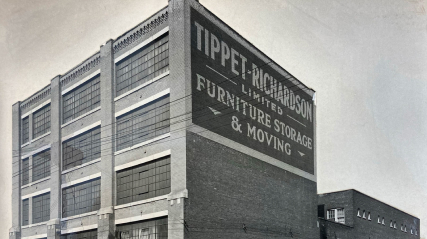
Tippet Richardson has supported moving households from Toronto for nearly a century. For a move to Rome, that experience is most useful when it helps you make better decisions early: what to ship, how to document it, how to prepare both addresses, and which questions to resolve before collection.
Wrapping Up
Your packing checklist for a first international move to Rome should do more than remind you to buy boxes. It should help you decide what belongs in the shipment, what you will need immediately, which goods need special attention, and what information is required for customs clearance and delivery planning.
Begin with a complete inventory, measure furniture against the Rome apartment or likely accommodation, separate essential documents from household goods, and confirm access at both addresses. Pack methodically, label cartons clearly, and raise unusual or valuable items before packing day.
These steps reduce uncertainty and make it easier to compare the right level of professional support; keep this on the packing checklist.
If the move includes fragile belongings, a substantial household, limited time, or complicated access, discuss the plan with an experienced international moving company before making final decisions.
Tippet Richardson can help you assess the move from Toronto to Rome in the context of your belongings and circumstances, drawing on nearly a century of moving experience.
The best next step is to turn your draft list into a measured inventory and request advice based on the actual contents of your home. A realistic plan gives you a clearer view of the work ahead and greater confidence as you prepare for moving abroad.