
- Cross border moving to USA requires immigration, customs, transport, and household planning to work together.
- Prepare a complete inventory and truthful descriptions before your Toronto move begins.
- Check destination access, building rules, storage needs, and delivery timing before selecting movers.
- Some belongings need special documentation, preparation, or separate advice before crossing the border.
- An experienced residential moving team can reduce avoidable delays and handling risks.
Cross border moving to USA is much easier when you plan the move as both a household transition and a regulated international move.
Toronto residents must prepare their belongings, confirm their personal entry requirements, understand the customs process, and coordinate collection and delivery conditions on both sides of the border.
The details matter because a Toronto condominium move, an older home with limited parking, and a destination property in the United States can each create different practical challenges.
This guide explains how to prepare household goods, what to discuss with cross border movers, how the border process affects your plan, and how to choose a Toronto to USA moving company with confidence.
Understanding cross border moving to USA from Toronto
Moving household belongings from Ontario to the United States involves more than loading a truck in Toronto and driving south. The move combines residential packing, inventory control, transport planning, border documentation, and delivery coordination. Understanding those elements early helps you compare services properly and prevents last-minute decisions.
What Makes a Toronto to USA Move Different
A local Toronto move usually depends on building access, parking, elevator reservations, packing requirements, and the distance between two addresses. A cross-border move includes those concerns plus a formal border crossing and destination-side requirements that may vary according to your personal circumstances and the goods being imported.
For cross border moving to USA, document official requirements in the moving plan.
Your moving plan should therefore account for four connected areas:
- Your immigration or residency position and the documents relevant to your entry
- The nature, quantity, value, and ownership history of your household goods
- The collection and delivery conditions at both properties
- The responsibilities of the moving company, customs professionals, and you as the shipper
These responsibilities should be clarified before moving day. A moving company can help organise the household goods and explain the information it needs, but it cannot make immigration decisions or guarantee how a government authority will assess an individual case.
When planning cross border moving to USA, review official requirements before bookings are finalized.
What Cross Border Residential Movers Typically Coordinate
For a household move, the moving team may be involved in planning the collection, packing selected or all household goods, preparing an inventory, loading the household goods, arranging transportation, and coordinating delivery. Cross border moving to USA benefits from early discussion of official requirements.
The exact scope depends on the service agreed for your move and the information available at the time of planning.
Ask how the company handles communication between the origin team, transport team, and delivery team. You should know who will be your main point of contact, how changes are reported, and which documents must be supplied before collection.
Clear communication is especially valuable when your closing date, lease commencement, or travel plans are fixed. Before starting cross border moving to USA, clarify official requirements with the appropriate party.
At Tippet Richardson, our experience with Residential Movers in Toronto helps us look beyond the driving distance. We discuss the home conditions, the items involved, the timing, and the practical hand-offs required for a move from Toronto to the USA so the plan is built around your actual circumstances.
Why Early Planning Pays Off
Cross-border moves often require more preparation than customers initially expect. A rushed inventory can omit items, vague descriptions can create questions, and late building approvals can affect collection. Early planning gives you time to decide what should travel, what should be sold or donated, and what may require specialist preparation.
A plan for cross border moving to USA should address official requirements clearly.
If your destination home is not ready, ask about storage options before your belongings are collected. Storage can be useful when a closing date changes or when you need time between leaving Ontario and taking possession in the USA.
However, storage can also add handling, cost, and scheduling considerations, so it should be treated as part of the original plan rather than an emergency afterthought. Cross border moving to USA requires careful review of the estimate scope as dates change.
Documents and Customs Preparation for Household Goods
The border process is one of the most important parts of a move from Ontario to the USA, but it is also the area where assumptions cause the greatest problems. Cross border moving to USA is easier when you confirm document timing early.
Requirements can vary according to your immigration status, the type of goods, the country of origin, and the circumstances of the household goods. Use current official guidance for your situation and provide complete information to your moving team.
Build a Detailed Household Inventory
A useful inventory does more than state “boxes” or “personal items”. It should identify the contents in plain language and distinguish between ordinary household goods, fragile possessions, electronics, furniture, tools, food, plants, medications, vehicles, and other categories that may receive different treatment.
For cross border moving to USA, document timing for required documents in the moving plan.
For higher-value belongings, record a description, approximate value, and identifying details such as a model number or serial number where practical. Photographing valuable or delicate items before packing can also help you retain a useful condition record.
Keep a copy of the inventory for yourself and do not pack documents that you may need during travel or at the border.
A truthful inventory is important for more than administration. It helps the moving team estimate packing materials, identify items needing special handling, and prepare for the space required on the vehicle. It also provides a clearer record if you later need to locate an item in storage or during delivery.
When planning cross border moving to USA, review budget assumptions before bookings are finalized.
Separate Items That Need Extra Attention
Before packing begins, identify anything that might be restricted, regulated, unusually valuable, hazardous, perishable, or difficult to transport. Examples can include firearms, ammunition, alcohol, plants, certain foods, chemicals, fuel, pressurised containers, and some medications.
Rules are not identical for every item, and permission to own something in Canada does not automatically mean it can cross into the USA as part of a household goods. Cross border moving to USA benefits from early discussion of document timing.
Do not conceal questionable items in cartons. Show them to the moving coordinator and verify the applicable requirements with the relevant authority. If an item cannot travel, removing it before packing is safer than discovering the issue when the household goods is already being processed.
Important personal papers, passports, immigration documents, financial records, jewellery needed during travel, medication, and essential electronics should usually remain with you unless you have received specific advice to include them. Your moving plan should clearly distinguish travelling essentials from goods being moved.
Before starting cross border moving to USA, clarify document timing with the appropriate party.
Understand Roles and Responsibilities
A residential mover coordinates the physical movement of your goods and may guide you through the information needed for the household goods. Customs authorities determine whether goods may enter and what documentation or charges apply. Immigration authorities determine your right to enter or remain in the USA.
A plan for cross border moving to USA should address document timing clearly.
These are different decisions made by different parties.
Before signing an agreement, ask which customs-related activities are included, which are handled by another party, and which documents you must complete yourself. Also ask what happens if authorities request additional information or if an item is held for review.
A responsible explanation is more useful than a promise that every household goods will clear without questions. Cross border moving to USA requires careful review of document timing as dates change.
The safest approach is to treat customs preparation as a shared process: you provide accurate information, the moving professionals organise the move details within their scope, and the appropriate authorities make the final decisions.
Timing and Changes
Do not wait until the week of collection to confirm your documentation. Your move date may depend on a property closing, a work start date, a visa or residency step, or the availability of your destination home. If any of those conditions changes, tell your moving coordinator promptly.
Cross border moving to USA is easier when you confirm customs guidance early.
A change in destination address, ownership status, household goods contents, or collection date can affect planning. Even a decision to add a vehicle, artwork, outdoor equipment, or stored belongings should be discussed before the truck is loaded.
For cross border moving to USA, document cost variables in the moving plan.
Preparing Your Toronto Home and Destination Property
A well-planned cross-border move can still become difficult if the two properties are not ready. Toronto buildings often require advance elevator bookings, loading instructions, insurance information, and strict move windows. Detached homes may have narrow driveways, limited curb space, stairs, or older construction that affects carrying routes.
When planning cross border moving to USA, review customs guidance before bookings are finalized.
Your US destination may have similar restrictions that you have not yet had an opportunity to inspect.
Plan Access in Toronto
Confirm the building’s move procedures as soon as you know the collection date. Ask about elevator reservations, loading dock access, permitted vehicle dimensions, security registration, parking restrictions, and the time allowed for loading.
In downtown Toronto, curb access and street congestion can be significant factors even when the distance from the building to the truck appears short. Cross border moving to USA benefits from early discussion of customs guidance.
For houses, inspect the route from each room to the vehicle. Measure tight stairwells, doorways, and turns if large furniture is involved. Tell the moving team about narrow lanes, basement stairs, low branches, long carries, or construction near the property.
Before starting cross border moving to USA, clarify customs guidance with the appropriate party.
These details influence the crew, equipment, packing approach, and time required.
If the property is a condominium, do not assume that a general move date is enough. The building may require a separate booking, a deposit, proof of insurance, or specific arrival instructions. Confirm these items in writing with property management and share the practical details with the moving coordinator.
Prepare the US Destination
Before collection, determine how the delivery vehicle will reach the new address. Consider the street width, driveway slope, parking availability, gated access, building rules, loading areas, stairs, lifts, and the distance from the vehicle to the entrance.
A plan for cross border moving to USA should address customs guidance clearly.
If you are moving into an apartment or condominium, reserve the lift and loading area according to the building’s process.
If you will not be present at delivery, arrange a reliable authorised contact and confirm how decisions will be made if access changes. Do not rely on a neighbour being available without discussing the arrangement in advance.
A delivery plan should identify who can receive the goods, where cartons will go, and how any visible exceptions will be recorded. Cross border moving to USA requires careful review of customs guidance as dates change.
If your new home is undergoing renovation, check whether floors, walls, staircases, and entrances are ready for furniture and cartons. A property that is technically accessible may still be unsuitable for delivery if tradespeople, wet surfaces, or unfinished flooring create a risk of damage.
Decide What Travels with You
Many households use a cross-border move as an opportunity to reduce what they own. This can make sense when appliances do not suit the destination, furniture will not fit, or the cost and effort of moving an item outweigh its practical value.
Cross border moving to USA is easier when you confirm service choices early.
It is worth measuring larger pieces and checking the layout of the new home before deciding.
Avoid making disposal decisions based only on carton count. A sentimental item may be worth transporting even if it has limited resale value, while an inexpensive but bulky item may consume disproportionate space and handling time.
The right decision depends on replacement cost, emotional value, condition, destination fit, and any border considerations.
Give yourself enough time to separate goods for household goods, travel, donation, sale, recycling, and disposal. Mixing these categories during packing is a common source of confusion and can lead to items being packed unintentionally.
For cross border moving to USA, document immigration dates in the moving plan.
Protect Fragile and High-Value Belongings
Fine art, antiques Movers, instruments, collections, glass, electronics, and heirlooms deserve an early conversation. Their size, material, value, condition, and sensitivity to vibration or temperature may affect packing and handling. Do not assume that ordinary carton packing is appropriate for every valuable item.
Take photographs and keep purchase records, appraisals, or other supporting documents where available. Ask how the items will be wrapped, crated, labelled, loaded, and delivered. The goal is not simply to move them; it is to create a handling plan that reflects their actual risk.
When planning cross border moving to USA, review immigration dates before bookings are finalized.
For high-value belongings, discuss valuation and protection terms before the move rather than after an incident. The agreement should be read carefully so you understand declared values, exclusions, claims procedures, and your responsibilities.
The Canadian moving services market was valued at USD 9.06 billion in 2024 and is projected to reach USD 14.08 billion by 2033, expanding at a compound annual growth rate (CAGR) of 5.05% during the forecast period.
You may also like: Moving to The Kingsway: Complete Local Moving Guide
Choosing Cross Border Movers for a Toronto to USA Move
The best cross border movers are not selected solely by comparing a headline price. A useful comparison considers the company’s experience with residential household moves, the clarity of its scope, the quality of its communication, and the way it handles uncertain details.
Cross border moving to USA benefits from early discussion of service choices.
A lower initial figure may not represent the same packing, storage, access, or delivery conditions.
Questions to Ask Before You Choose
Ask each company to explain the proposed service in plain language. You should be able to identify what happens before collection, on moving day, during transport, at the border, and at delivery. Request clarification if the estimate uses broad categories such as “standard household goods” without explaining what is included.
Before starting cross border moving to USA, clarify service choices with the appropriate party.
Useful questions include:
- Is the move residential only, and which parts of packing, loading, transport, storage, and delivery are included?
- Which documents and inventory details are needed before collection, and who handles each customs-related step?
- How will the plan account for Toronto building access, destination restrictions, fragile items, and changes to the move date?
Also ask how the company communicates updates, how additional services are approved, and what information is needed to assess a reliable estimate. A professional quote should be based on the household goods and conditions, not on a vague assumption about the number of rooms.
A plan for cross border moving to USA should address service choices clearly.
Compare Estimates Properly
A meaningful comparison should place each estimate beside the same information: origin and destination, approximate household goods volume, packing level, access conditions, stairs or lifts, storage, special items, and requested timing. If one quote excludes packing and another includes it, the totals cannot be compared fairly.
Be cautious with unusually low estimates that do not explain assumptions. The final cost can be affected by the amount of property, the services selected, access difficulties, storage duration, changes to the itinerary, and other circumstances. Ask what could cause the estimate to change and how you will be notified.
Cross border moving to USA requires careful review of service choices as dates change.
You should also understand payment terms, cancellation or change provisions, claims procedures, and any documents provided for the household goods. These details are part of a sound decision, not merely administrative wording.
Look for Communication Quality
The planning conversation often reveals how the move will be managed. A careful coordinator asks about the property, access, inventory, timing, and destination rather than giving an instant answer based only on a postal code. They should identify uncertainties instead of hiding them.
You should receive a clear point of contact and know when important information must be supplied. If your move involves a closing date, a lease, temporary accommodation, or storage, explain those dependencies early. Cross border moving to USA is easier when you confirm required records early.
Good communication cannot remove every variable, but it gives you a better chance to respond before a small issue becomes a major disruption.
When Professional Packing Is Worth Considering
Packing everything yourself may seem straightforward, particularly if you have plenty of time. For a cross-border household goods, however, professional packing can improve inventory accuracy, protect delicate goods, and reduce the number of poorly labelled or overfilled cartons.
It may also be practical when you are balancing a sale, work transition, travel, and family responsibilities. For cross border moving to USA, document required records in the moving plan.
A partial packing service can be a useful middle option. You might pack ordinary clothing and books while asking specialists to handle fragile kitchenware, artwork, wardrobes, instruments, or difficult-to-protect items.
Discuss the division of responsibility clearly so there is no uncertainty about which goods were professionally packed and which were prepared by the household.
The Value of Nearly a Century of Experience
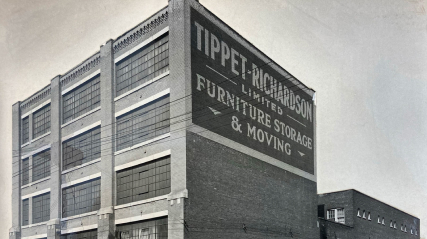
Tippet Richardson has served moving customers since 1927. That history does not remove the need for careful planning or official verification, but it reflects the value of a long-standing approach to preparation, handling, and communication. When planning cross border moving to USA, review required records before bookings are finalized.
For a Toronto resident considering a move to the USA, the practical question is whether the company can explain your particular plan clearly and manage the details that matter to your household.
Choose the provider that gives you the clearest understanding of the work, the assumptions behind the estimate, and the steps still required from you.
What Should You Do Before Moving Household Goods Across the Border?
The final stage of preparation is turning general advice into a working plan. The following sequence helps you move from an initial decision to a collection that is easier to manage and a delivery that is less likely to be delayed by avoidable surprises.
Cross border moving to USA benefits from early discussion of required records.
Several Weeks Before Collection
Confirm the destination address, anticipated occupancy date, and your own travel or entry arrangements. Begin the inventory and separate goods that will not travel. Contact your condominium or property manager in Toronto and ask the destination property about access rules.
Gather important records, including identity and immigration documents relevant to your situation, purchase or ownership records for unusual items, appraisals for valuable belongings, and any information needed to describe the household goods accurately.
Requirements vary, so verify current official instructions rather than relying on an old move or another person’s experience. Before starting cross border moving to USA, clarify required records with the appropriate party.
If storage may be necessary, decide whether it is temporary, extended, or a contingency. Ask how access to stored goods works and whether adding or removing items affects the plan.
Before Packing Begins
Walk through the property with the moving coordinator if that service is available. Identify fragile items, heavy furniture, restricted or questionable goods, items that must remain with you, and anything that requires disassembly. Confirm whether the moving team is packing the entire home or only selected rooms.
A plan for cross border moving to USA should address required records clearly.
Label the belongings you are carrying personally. Keep a separate travel bag with documents, medication, chargers, basic clothing, valuables, and items needed for the first days at your destination. Avoid placing those essentials in the household goods merely because the carton is convenient.
On Collection Day
Keep the inventory and essential documents accessible. Before the crew begins, point out items that need special care and confirm which goods are excluded from the household goods. Check that building access remains available and that the vehicle can use the planned loading area.
Cross border moving to USA requires careful review of required records as dates change.
As items are packed and loaded, try not to add unrecorded goods without discussing them. Last-minute additions can affect the inventory, space, handling plan, and border information. If something changes, tell the crew leader or coordinator immediately.
Cross border moving to USA is easier when you confirm current entry requirements early.
During Transport and Before Delivery
Maintain communication with the designated coordinator and report changes to your contact details or destination access. If the property will not be ready, do not wait until the vehicle is near the destination to raise the issue. Discuss alternatives as soon as you know there is a problem.
At delivery, identify the rooms where furniture and cartons should be placed. Inspect visible condition as the goods are brought in and follow the documentation process supplied by the mover. For cross border moving to USA, document current entry requirements in the moving plan.
Keep cartons until you are confident that the contents are accounted for, particularly if you may need to report an issue.
You may also like: Moving to Edinburgh from Toronto: Complete Relocation Guide
Common Mistakes to Avoid
The most preventable problems usually come from incomplete information rather than the distance itself. Customers may forget to mention a lift restriction, assume a destination building has easy access, pack documents into the household goods, or describe valuable items too generally.
Other frequent mistakes include waiting to decide about storage, failing to measure large furniture, adding goods after the inventory is prepared, and treating a moving estimate as a final answer before the household goods and access conditions are understood. A short planning conversation can often identify these risks early.
When planning cross border moving to USA, review possible extra work before bookings are finalized.
For a move from Ontario to the USA, accuracy is more valuable than optimism. Tell your moving team what you know, flag what you do not know, and verify official requirements that depend on your personal situation.
Wrapping Up
Cross border moving to USA from Toronto requires more than arranging transport. You need a realistic inventory, accurate household descriptions, suitable packing, confirmed access at both homes, an understanding of the parties involved in the border process, and a plan for storage or timing changes if circumstances shift.
Start by deciding what is truly worth moving, then gather the information needed to describe those goods properly. Compare moving estimates on an equal basis, read the service terms carefully, and choose cross border movers who ask detailed questions rather than making assumptions.
Cross border moving to USA benefits from early discussion of current entry requirements.
Tippet Richardson can help Toronto residents organise the residential moving elements of a move to the USA, from early planning and packing discussions through collection and delivery coordination within the agreed service. With a history reaching back to 1927, our approach is grounded in careful preparation and dependable communication.
Your next step should be a conversation based on your household, access conditions, destination, and timing—not a generic room-count estimate.